Back to home
INTERNATIONAL2 July 2026
The Vatican's Reassertion of Authority: Excommunicating the Society of Saint Pius X
The Holy See has reimposed automatic excommunication on roughly 600,000 members of the Society of Saint Pius X, a traditionalist Catholic group. The move underscores a renewed assertion of papal primacy amid ongoing tensions between continuity and post‑Vatican II reforms.
La
La Rédaction
The Vertex
5 min read
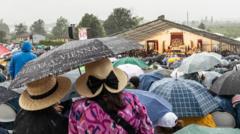
Source: www.bbc.co.uk
Around 600,000 adherents of the Society of Saint Pius X, a traditionalist Catholic movement, now find themselves under the Vatican’s most severe censure.
The Society, founded in 1970 by Archbishop Marcel Lefebvre, emerged in reaction to the reforms of the Second Vatican Council, particularly the liberalization of liturgy and ecumenical outreach. Tensions escalated after 1988 when Lefebvre illicitly consecrated four bishops, prompting automatic excommunication that was later lifted in 2009 under Pope Benedict XVI. This move reflects a broader struggle within Catholicism between continuity and adaptation. While Pope Francis seeks to centralise authority and promote synodality, the SSPX remains steadfast in its rejection of certain post‑conciliar changes, viewing them as threats to doctrinal purity.
The excommunication thus operates not merely as a spiritual sanction but as a strategic assertion of papal primacy in a church navigating internal fragmentation and external secular pressures.
The repercussions will be felt among the 600,000 faithful, many of whom already operate in semi‑autonomous parishes worldwide. It may also affect ecumenical dialogue, as other Christian bodies watch the Vatican’s willingness to enforce discipline. Whether this will catalyse renewed negotiations or deepen schisms remains uncertain, but the episode underscores the Vatican’s resolve to reaffirm its doctrinal jurisdiction in a rapidly globalising religious landscape.
The decision also carries political weight, as the SSPX has historically enjoyed support from conservative politicians in several European countries, and its network of schools and media outlets provides a platform that influences public opinion on issues ranging from family law to education policy. Governments that have previously tolerated the movement’s activities may now face pressure to reassess their stance, especially if the excommunication leads to the closure of institutions or restrictions on religious gatherings.