Back to home
INTERNATIONAL4 July 2026
America’s Exit from Nigeria Signals a New Phase in Sahel Counter‑Terrorism
The United States announced the withdrawal of its remaining troops from Nigeria, concluding a joint operation declared a success. The decision reflects both tactical achievement and a strategic shift toward limited, advisory roles in West Africa.
La
La Rédaction
The Vertex
5 min read
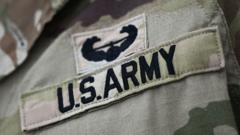
Source: www.bbc.co.uk
The United States announced the pull‑out of its remaining troops from Nigeria, concluding a joint operation that began in December 2025 and was declared a success by Washington. The decision comes amid growing criticism at home over the long‑term cost of overseas deployments and a renewed focus on domestic security challenges.
The mission, conducted in partnership with the Nigerian Armed Forces, leveraged intelligence sharing, drone surveillance and limited kinetic strikes to dismantle ISWAP’s command structures and training camps in the north‑eastern Borno and Yobe states. By mid‑2026 the coalition reported the elimination of key operatives and a measurable decline in extremist attacks, a narrative that justified the withdrawal as a strategic victory rather than a retreat.
The pull‑out follows a series of U.S. deployments across the Sahel, where the Pentagon has oscillated between direct combat support and advisory roles. While earlier missions in Mali and Burkina Faso faced setbacks, the Nigerian operation benefitted from improved coordination with local forces and a more stable security environment, suggesting a template for future counter‑terrorism engagements.
Looking ahead, Washington is likely to transition to a more restrained posture, emphasizing intelligence assistance and capacity‑building rather than ground troops. This shift could reshape the dynamics of the fight against ISWAP, potentially empowering regional actors while also raising concerns about a resurgence of insurgent activity if local forces lack sustained support. Analysts warn that the drawdown may embolden other extremist groups operating in the region, underscoring the need for continued diplomatic and humanitarian engagement. The withdrawal thus reflects both a tactical success and a broader recalibration of U.S. strategic priorities in West Africa.