Back to home
POLITICS19 June 2026
Washington Ties HIV Aid to Afrikaner Safety, Raising Questions on South Africa’s Health Future
The United States has halted its multi‑billion‑dollar HIV programme in South Africa, conditioning future aid on demonstrable protection for the Afrikaner minority. The move threatens health outcomes and highlights the growing politicisation of foreign assistance.
La
La Rédaction
The Vertex
5 min read
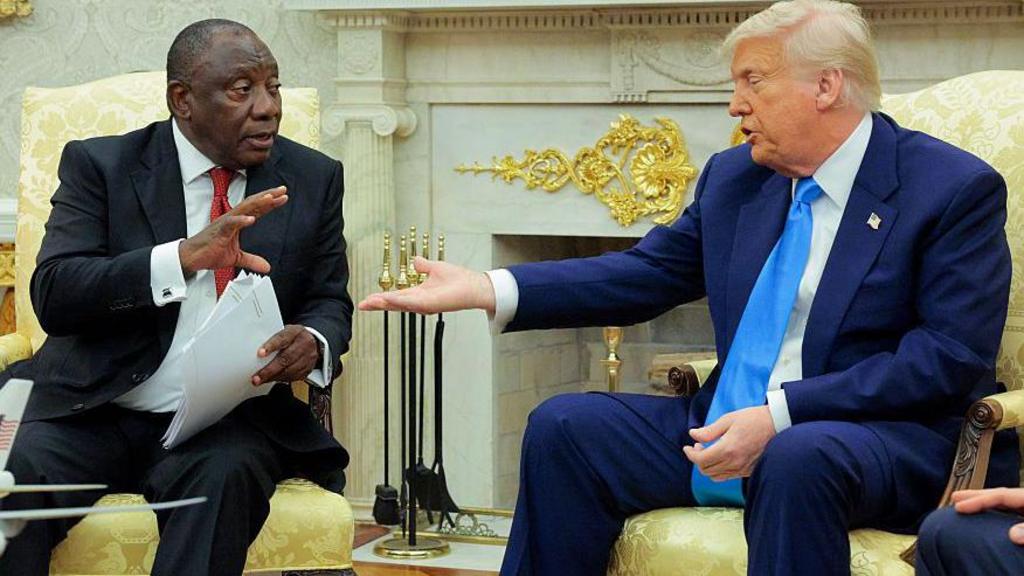
Source: www.bbc.com
Washington’s decision to halt its multi‑billion‑dollar HIV programme in South Africa, citing inadequate protection for the white Afrikaner minority, signals a sharp turn in the long‑standing US‑South Africa partnership. The State Department now ties PEPFAR funding to demonstrable safety improvements for Afrikaner communities, a condition unprecedented in health assistance.
The announcement carries domestic political resonance in the United States, where human‑rights groups and sections of the right frame South Africa’s crime statistics as a breach of minority protection obligations, using the Afrikaner case to rally support for a tougher aid stance. In South Africa, the move threatens to deepen tensions with a key donor and may be seized upon by political factions to amplify debates over race and sovereignty.
Economically, the abrupt cut would jeopardise roughly a third of South Africa’s antiretroviral supply and extensive testing networks, risking a resurgence of HIV among high‑risk groups such as sex workers, migrants and men who have sex with men, and forcing costly emergency responses which could reverse years of progress and strain the public health budget.
Historically, the United States has a history of conditioning aid on governance standards, from the post‑apartheid democratisation agenda to recent anti‑corruption concerns. The Afrikaner claim, while rooted in genuine safety concerns, also serves as a proxy for broader disputes over land redistribution and the legacy of apartheid, reflecting how health assistance can become a lever for geopolitical and ideological objectives.
Looking ahead, South Africa may be compelled to seek alternative financing – from the Global Fund, private philanthropy or domestic budget reallocations – while the United States may recalibrate its aid architecture, tying future health assistance to a wider set of human‑rights benchmarks. The outcome will test both nations’ capacity to balance humanitarian imperatives with political symbolism.