Back to home
INTERNATIONAL30 June 2026
Supreme Court Upholds State Bans on Transgender Women in Women’s Sports
The U.S. Supreme Court upheld state bans on transgender women competing in women’s sports, a decision praised by former President Trump and condemned as heartbreaking by LGBT advocacy groups. The ruling highlights a growing cultural clash over gender, law, and fairness in athletics.
La
La Rédaction
The Vertex
5 min read
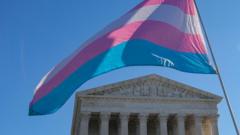
Source: www.bbc.co.uk
On June 30, 2026, the United States Supreme Court affirmed state statutes that prohibit transgender women from competing in women’s school and collegiate athletics. The 6‑3 decision, which upheld bans enacted in several jurisdictions, marks the highest court’s first definitive ruling on the intersection of gender identity and competitive sport.
Legal scholars note that the Court’s reasoning hinged on a narrow interpretation of the Fourteenth Amendment’s equal protection clause, deferring to legislative judgments rather than extending constitutional protections to transgender athletes. The opinion emphasizes deference to state legislatures, citing procedural safeguards and the alleged fairness of women’s competition.
Former President Donald Trump hailed the outcome as a “big win,” positioning the ruling within his broader narrative of protecting traditional values. Conversely, a leading LGBT advocacy organization described the decision as “heartbreaking,” arguing that it marginalizes a vulnerable population and disregards scientific evidence on gender identity.
The ruling follows a wave of state-level legislation that has increasingly framed gender participation as a matter of biological sex, reflecting a broader cultural clash. Legal challenges are likely to continue, with potential petitions for rehearing and congressional action. The decision may influence future Title IX enforcement and the emerging debate over inclusive policies in international sport.
Beyond the courtroom, the decision has reignited public discourse on inclusion versus fairness, with protests erupting on campuses and in professional leagues. Critics warn that the ban could deter transgender participation in higher education, while supporters claim it preserves competitive equity. As the United States heads toward a 2028 presidential election, the issue is poised to become a decisive cultural flashpoint, shaping not only athletic policy but also broader narratives about identity, rights, and the role of government in personal matters.