Back to home
INTERNATIONAL11 July 2026
Washington Disburses $3 Million to Victims of the Enigmatic Havana Syndrome
The United States has allocated $3 million to compensate individuals who have suffered from the unexplained Havana Syndrome, a condition first reported by diplomats and intelligence personnel a decade ago.
La
La Rédaction
The Vertex
5 min read
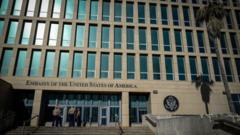
Source: www.bbc.co.uk
A decade after diplomats, intelligence operatives and their families first reported a puzzling constellation of symptoms now identified as Havana Syndrome, the United States government has authorized a $3 million settlement for those affected, marking a rare acknowledgment of the condition’s human cost. The compensation, though modest relative to the scale of the problem, reflects growing pressure from affected families and congressional oversight committees demanding accountability. The settlement, though modest relative to the scale of the problem, reflects mounting pressure from affected families and congressional oversight committees that have demanded greater transparency and accountability. This financial acknowledgment may pave the way for broader reforms in how the government monitors and supports its overseas personnel.
The syndrome manifests through severe headaches, vertigo, cognitive fog, and, in some instances, auditory disturbances that resist standard medical explanation. Early theories implicated microwave or radio‑frequency weapons, while later studies have explored environmental triggers and neurophysiological stress pathways. The absence of a definitive etiology has kept both physicians and intelligence analysts in a state of unresolved tension, complicating efforts to protect personnel stationed abroad.
The $3 million payout represents the first sizable financial concession by Washington to acknowledge the syndrome’s impact, highlighting both the seriousness of the health concerns and the political cost of admitting a lapse in protective measures. It follows a series of diplomatic episodes where unexplained ailments prompted emergency evacuations, heightened security protocols, and strained bilateral relations, illustrating how the mystery has permeated the fabric of U.S. foreign service operations.
Looking forward, the settlement may catalyze a coordinated research agenda, increased funding for medical monitoring of overseas staff, and clearer diplomatic guidelines regarding exposure risks. Whether this financial gesture translates into substantive policy change remains to be seen, but it signals that the once‑obscure condition has moved from whispered speculation to an official matter of accountability, potentially reshaping how the United States safeguards its intelligence community abroad.