Back to home
INTERNATIONAL11 July 2026
Unveiling the $3 Million Mystery: U.S. Compensation for Havana Syndrome Victims
A decade after American officials first reported the puzzling symptoms known as Havana Syndrome, the U.S. government has approved roughly $3 million in settlements for affected diplomats and their families. The payment marks a rare acknowledgment of a condition that remains medically unresolved.
La
La Rédaction
The Vertex
5 min read
Source: www.bbc.co.uk
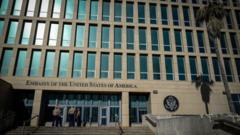
A decade ago, American officials, diplomats and their families began reporting a puzzling set of symptoms—severe headaches, cognitive fog, dizziness and, in some cases, hearing loss—that defied conventional diagnosis. The cluster of ailments, later dubbed “Havana Syndrome,” sparked intense speculation about diplomatic sabotage, covert weapons, or an unknown environmental trigger.
In a rare concession, the U.S. government has now earmarked roughly $3 million to settle claims from a handful of affected personnel, underscoring the seriousness with which the administration views the episode. While the exact number of victims remains undisclosed, the settlement marks the first tangible acknowledgment of a condition that has eluded precise medical identification for years.
The episode fits into a larger pattern of diplomatic health concerns, from the 2017 “sonic attacks” in Cuba to recent reports of unexplained illnesses among embassy staff worldwide. It also reflects a shifting U.S. posture toward intelligence personnel, balancing secrecy with a growing responsibility to protect the well‑being of those who serve abroad.
Medical researchers remain divided, with some attributing the symptoms to directed‑energy weapons while others point to environmental factors or stress‑related disorders. The lack of consensus hampers definitive policy action, yet the $3 million settlement signals a willingness to confront the issue directly, even as the intelligence community continues to classify the underlying cause.
Looking ahead, the payout may accelerate calls for standardized medical screening and a coordinated inter‑agency response to unexplained syndromes. If the government can move beyond ad‑hoc compensation, it could set a precedent for how democracies address emergent health threats within the sensitive confines of espionage, potentially reshaping diplomatic risk assessments for years to come.