Back to home
INTERNATIONAL14 March 2026
US Military Reinforcement in Middle East: Strategic Signal or Tactical Necessity?
The US is reportedly sending additional Marines and warships to the Middle East, redeploying forces from Japan. This strategic move signals heightened tensions and raises questions about America's long-term regional priorities.
La
La Rédaction
The Vertex
5 min read
Source: www.bbc.com
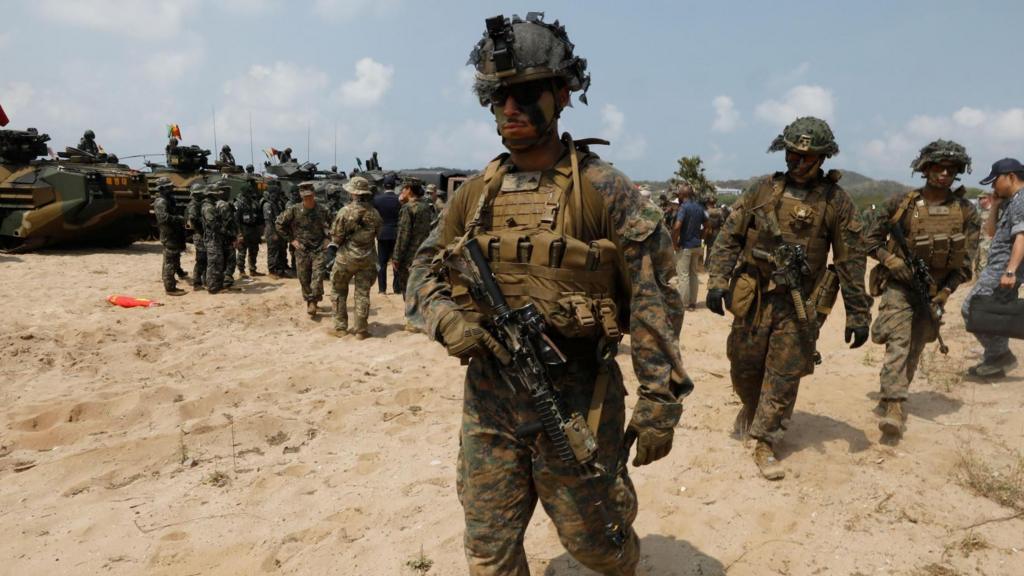
The reported deployment of additional US Marines and warships to the Middle East marks a significant escalation in American military posture in a region already simmering with tensions. According to CBS News, the reinforcements will come from an amphibious ready group typically stationed in Japan, suggesting a deliberate redeployment of forces across the Pacific to address emerging threats closer to the Persian Gulf.
This strategic shift comes amid heightened concerns over Iran's nuclear ambitions, the ongoing conflict in Yemen, and the volatile situation in Syria. The presence of amphibious assault ships carrying Marine expeditionary units provides the US with enhanced rapid response capabilities, potentially deterring aggressive actions by regional adversaries while reassuring allies like Saudi Arabia and Israel.
However, the move also raises questions about America's long-term strategy in the region. Is this a temporary measure in response to specific intelligence, or does it signal a broader commitment to maintaining military dominance in the Middle East despite previous declarations of reducing American footprint? The redeployment from the Pacific could also be interpreted as a recalibration of US priorities, potentially creating a power vacuum that China might seek to exploit in East Asia.
What remains clear is that this reinforcement represents more than just additional military hardware—it's a geopolitical statement. As tensions continue to escalate across multiple fronts, the international community will be watching closely to see whether this deployment serves as a stabilizing force or becomes a flashpoint for further conflict.