Back to home
INTERNATIONAL22 April 2026
The Strait of Hormuz: A Powder Keg in the Making
The Strait of Hormuz remains a flashpoint in US-Iran tensions, with Pakistan pushing for talks. The region's history and the stakes involved make this standoff a critical test for global diplomacy.
La
La Rédaction
The Vertex
5 min read
Source: www.bbc.com
The Strait of Hormuz, a narrow waterway through which nearly 20% of the world's oil passes, has once again become the epicenter of geopolitical tension. Despite President Trump's recent extension of a temporary ceasefire with Iran, the region remains a ticking time bomb. The current standoff between the United States and Iran is not merely a bilateral issue but a complex web of regional and global interests.
The roots of this conflict trace back to the 1979 Iranian Revolution, which fundamentally altered the balance of power in the Middle East. Since then, the US has maintained a policy of containment towards Iran, viewing it as a destabilizing force in the region. Iran, in turn, has sought to assert its influence through proxy groups and nuclear ambitions, leading to a series of confrontations, including the 2019 tanker attacks and the 2020 assassination of Qasem Soleimani.
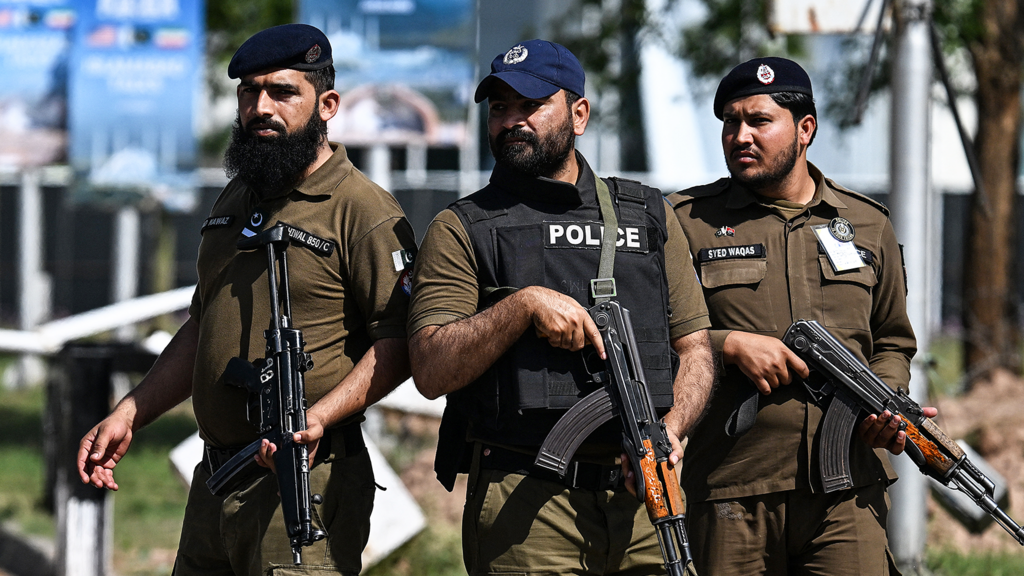
Pakistan's recent push for dialogue is a significant development. As a neighboring country with historical ties to both the US and Iran, Pakistan's mediation efforts could provide a much-needed channel for de-escalation. However, the success of these talks will depend on the willingness of both parties to compromise on their core demands. For the US, this means lifting sanctions and recognizing Iran's regional role. For Iran, it involves curtailing its nuclear program and ceasing support for proxy groups.
Looking ahead, the situation in the Strait of Hormuz remains precarious. Any miscalculation or escalation could lead to a broader conflict, with far-reaching consequences for global energy markets and international stability. The international community must therefore remain vigilant and support diplomatic efforts to prevent a catastrophic outcome.