Back to home
INTERNATIONAL13 July 2026
The Strait’s Paradox: US Asserts Openness Amid Escalating Iran‑US Hostilities
On 12 July 2026, the United States reaffirmed that the Strait of Hormuz remains open despite Iranian claims and a series of retaliatory strikes, highlighting the volatile interplay between Tehran’s closure rhetoric and Washington’s military response.
La
La Rédaction
The Vertex
5 min read
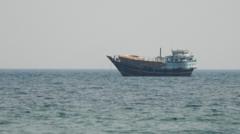
Source: www.bbc.co.uk
On 12 July 2026, Washington reiterated that the Strait of Hormuz remains open for international navigation, even as it exchanged a series of precision strikes against Iranian military assets in response to Tehran’s claim that the waterway had been closed.
Iranian forces announced the closure on 11 July, describing a coordinated campaign of missile and drone attacks on United States‑allied installations across the Gulf, including naval bases in Bahrain and Saudi Arabia. The United States, while confirming the Strait’s operational status, characterized its retaliatory strikes as defensive measures aimed at degrading Iran’s long‑range strike capability and deterring further aggression.
The Strait of Hormuz, a 34‑kilometre conduit through which roughly one‑fifth of global oil transits, has been a flashpoint since the 1979 revolution. Previous episodes of closure threats, such as the 2019‑2020 tanker seizures, underscored the vulnerability of the global supply chain to geopolitical brinkmanship. Washington’s insistence on openness reflects both a strategic interest in preserving maritime commerce and a political message that the United States will not yield to coercive pressure.
The escalation risks a broader confrontation that could disrupt oil flows, raise insurance premiums, and strain allied relations. In the coming weeks, diplomatic channels—ranging from the Gulf Cooperation Council to back‑channel talks in Muscat—will be tested, while the United States may consider additional sanctions or a limited naval presence to reassure partners. Analysts warn that without a de‑escalation framework, the incident could become a recurring flashpoint in the Middle East.