Back to home
INTERNATIONAL4 March 2026
US-Ecuador Joint Operation: A New Front in the War on Drugs
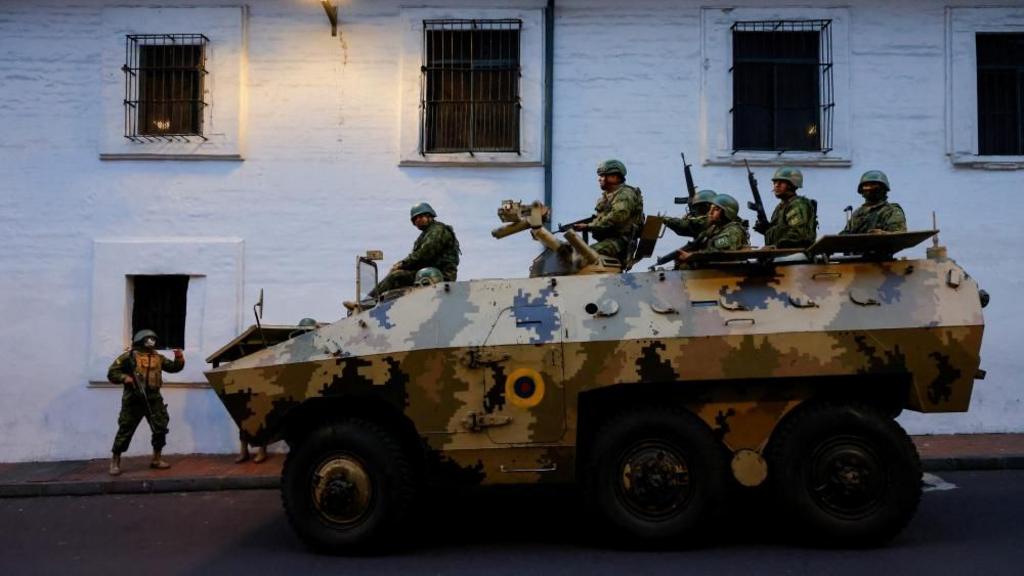
US and Ecuadorian forces have launched a joint operation targeting drug trafficking networks in Ecuador, framing the mission as a fight against designated terrorist organizations. This marks a significant escalation in US-Latin American relations and raises questions about sovereignty, long-term strategy, and the effectiveness of militarized approaches to drug trafficking.
La
La Rédaction
The Vertex
5 min read
Source: www.bbc.com
In a significant escalation of counter-narcotics efforts in Latin America, US and Ecuadorian forces have launched a joint operation targeting drug trafficking networks in Ecuador. This collaboration, announced by Washington, frames the mission as a fight against what the US designates as terrorist organizations operating within Ecuador's borders.
The timing of this operation is particularly noteworthy. Ecuador, once considered a peaceful oasis in a region plagued by drug violence, has seen a dramatic surge in cartel activity over the past two years. The country's strategic location along the Pacific coast makes it an ideal transshipment point for cocaine bound for North American and European markets. This geographical advantage has attracted the attention of powerful transnational criminal organizations, transforming Ecuador from a transit country to a conflict zone.
This joint operation represents more than just a tactical response to immediate security concerns. It signals a fundamental shift in US foreign policy toward the region. The Biden administration appears to be adopting a more muscular approach to combating drug trafficking, moving away from the largely diplomatic and economic strategies of recent years. By framing drug cartels as terrorist organizations, the US is potentially opening the door to more aggressive military interventions across Latin America.
The implications for Ecuador are profound and potentially destabilizing. While the government of President Daniel Noboa has welcomed US assistance in combating increasingly bold cartel activities, the presence of American troops on Ecuadorian soil raises complex questions about sovereignty and long-term dependency. Ecuador's neighbors, particularly Colombia and Peru, will be watching closely, as this operation could set a precedent for expanded US military involvement in the region.
Looking ahead, several scenarios emerge. The most optimistic outcome would see a significant disruption of trafficking routes and a degradation of cartel capabilities. However, history suggests that such operations often lead to the dispersal rather than elimination of criminal networks, potentially spreading violence to new areas. There's also the risk that increased militarization could further erode democratic institutions and civil liberties in Ecuador.
This operation ultimately reflects the ongoing struggle to address the root causes of drug trafficking: poverty, lack of economic opportunities, and the enormous demand for narcotics in consumer markets. Without addressing these fundamental issues, military operations, no matter how well-executed, may only provide temporary relief in an endless cycle of violence and counter-violence.