Back to home
INTERNATIONAL1 May 2026
The Suspended Clock: Hegseth’s Gambit on Congressional Oversight in the Iran Conflict
Defence Secretary Pete Hegseth says the legal deadline for reporting war to Congress can be paused during a cease‑fire with Iran, raising constitutional questions about executive power and congressional oversight. The remark may set a precedent for future unilateral military actions.
La
La Rédaction
The Vertex
5 min read
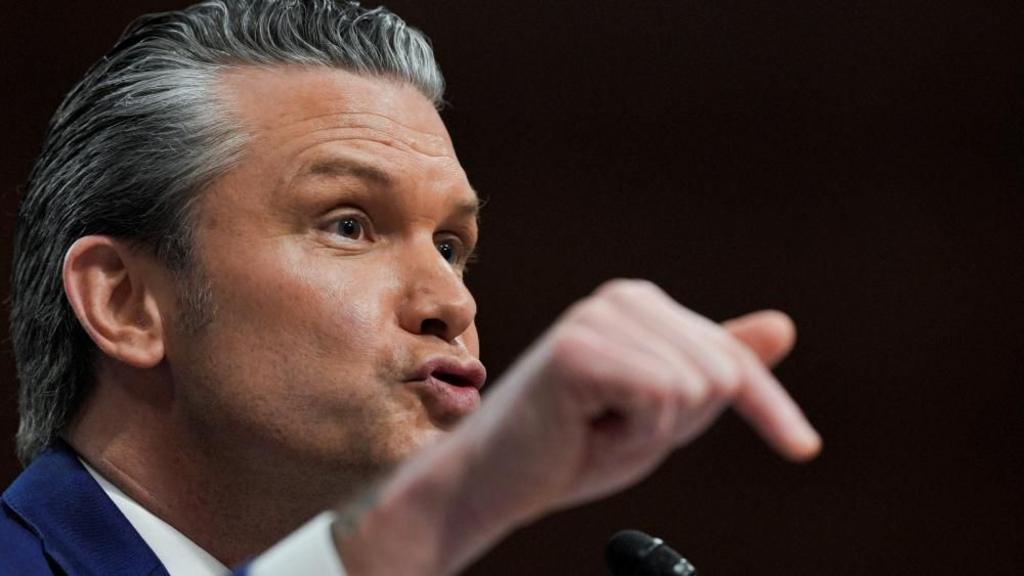
Source: www.bbc.com
In a terse briefing, US Defence Secretary Pete Hegseth announced that the statutory clock allowing the president to notify Congress before launching a military operation “pauses or stops” during a cease‑fire with Iran. The remark comes as Washington navigates a fragile de‑escalation after Tehran’s recent missile drills, and as the legal requirement under the War Powers Resolution obliges the executive to report within 48 hours of hostilities. The comment follows a week of intense diplomatic signaling, as European allies urge restraint while Tehran warns of further retaliation.
The statement signals an unprecedented claim that the executive can unilaterally suspend a constitutionally mandated check, raising questions about the balance of power. By invoking a cease‑fire, Hegseth attempts to argue that hostilities have been temporarily halted, thereby sidestepping the need for immediate congressional consultation. This maneuver could set a precedent that future presidents might exploit to bypass legislative oversight, especially in covert or limited engagements.
Historically, presidents have sought extensions—most notably during the 1991 Gulf War and the 2003 Iraq invasion—yet they have generally complied with the 48‑hour reporting window. The current claim diverges by suggesting the clock can be frozen altogether, a notion absent from prior legal interpretations and likely to provoke a constitutional showdown.
If Hegseth’s assertion holds, it could erode congressional authority and embolden a more unilateral executive in foreign conflict decisions. Conversely, a robust legislative response may reaffirm the War Powers Resolution’s intent, reinforcing democratic oversight and shaping the contours of future US engagements in the Middle East. Such a shift would test the resilience of American democratic institutions and could influence allied perceptions of US reliability.