Back to home
INTERNATIONAL24 June 2026
Navigating the Strait: UN Evacuation Plans and Rubio’s Toll Warning
The United Nations announced a humanitarian evacuation of sailors trapped in the Strait of Hormuz, while U.S. Secretary of State Marco Rubio warned Iran that no fees may be charged for vessels transiting the waterway. The episode highlights the intersection of legal sovereignty, energy security, and geopolitical tension.
La
La Rédaction
The Vertex
5 min read
Source: www.bbc.co.uk
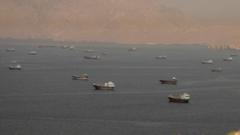
In a rare joint statement, the United Nations announced it will commence a humanitarian evacuation of sailors trapped in the Strait of Hormuz, a waterway that has become a flashpoint in the widening contest between Tehran and Washington. The operation, which will involve multinational vessels and diplomatic coordination, underscores the growing strain on maritime security in one of the world’s most critical chokepoints.
U.S. Secretary of State Marco Rubio warned Iran that “no country can charge fees for ships to travel through the strait,” invoking the principle of freedom of navigation enshrined in the United Nations Convention on the Law of the Sea (UNCLOS). His remarks come as Iran has threatened to impose tolls on commercial traffic, a move that would contravene international law and could jeopardize the flow of oil, which accounts for roughly a fifth of global seaborne petroleum.
The Strait of Hormuz, through which 20‑30 % of world trade passes, has been a recurring arena for geopolitical brinkmanship since the 1979 Islamic Revolution. Tehran’s periodic seizures of vessels, coupled with U.S. naval patrols, have created a volatile environment where civilian crews are often caught in the crossfire. The UN’s evacuation plan reflects a shift from purely military deterrence toward a more coordinated humanitarian response, highlighting the limits of unilateral posturing.
Looking ahead, the episode may catalyze renewed diplomatic efforts to codify safe‑passage guarantees, or it could deepen the rivalry if Iran persists with toll proposals. Either way, the incident reminds policymakers that the economics of energy security are inseparable from the legal and moral obligations of maritime sovereignty.