Back to home
INTERNATIONAL6 June 2026
St. Petersburg Under Drone Fire: A New Front in the Ukrainian Conflict
St. Petersburg’s governor ordered residents to stay indoors after a wave of Ukrainian‑made drones struck the city, marking the first such attack on Russian civilian territory since the war began. The incident highlights the growing use of low‑cost drone swarms and raises questions about future escalation.
La
La Rédaction
The Vertex
5 min read
Source: www.bbc.com
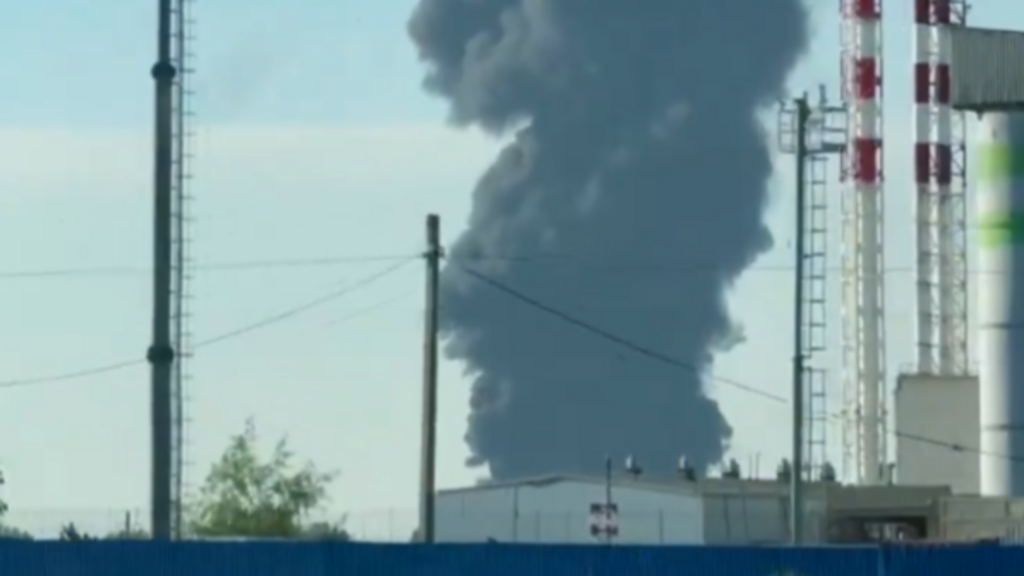
For the first time since the invasion began, St. Petersburg’s governor ordered residents to remain indoors after a wave of Ukrainian‑made drones struck the city, marking a rare escalation of the conflict onto Russian civilian soil.
The attack, involving at least a dozen Shahed‑type UAVs—likely of Iranian manufacture—traveled at low altitudes and relied on GPS navigation, complicating early detection. Russian Pantsir‑S1 and other short‑range systems scrambled to intercept, but fragments fell in residential districts, prompting panic and a curfew‑like directive. Analysts note that the use of cheap, mass‑produced drones signals a shift toward low‑cost, high‑frequency strikes that complicate traditional defence architectures and expose vulnerabilities in Russian homeland security.
This incident fits a broader pattern: Kyiv has increasingly targeted strategic and symbolic sites inside Russia, from the Black Sea fleet to energy infrastructure, aiming to erode public morale and test Moscow’s response capacity. The Russian government’s description of the event as unprecedented underscores both the tactical novelty and the political stakes, as the Kremlin seeks to portray its territory as invulnerable, while Western officials warn that such attacks risk further destabilising the already fragile European security architecture.
Looking ahead, the drone campaign may accelerate a new phase of the war, prompting Russia to reinforce air‑defence networks and possibly retaliate with deeper strikes on Ukrainian logistics. For the international community, the escalation underscores the need for revised conflict‑de‑escalation mechanisms and highlights the growing role of inexpensive aerial platforms in modern warfare, suggesting that future confrontations will be increasingly defined by swarm tactics and rapid, decentralized decision‑making.