Back to home
POLITICS6 May 2026
Oleshki's Silent Siege: The Human Cost of Being Trapped on the Frontline
Residents of Oleshki have endured months without food or medicine, describing a 'road of death' where every move endangers their lives.
La
La Rédaction
The Vertex
5 min read
Source: www.bbc.com
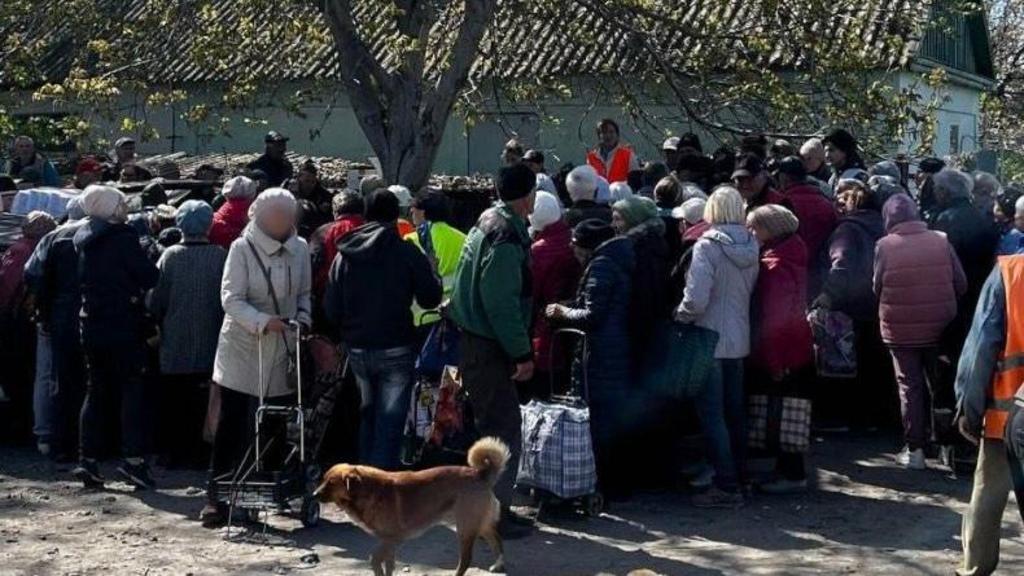
In the battered town of Oleshki, east of Kharkiv, residents have endured a months‑long blockade that has turned daily life into a waiting game for food, medicine and any sign of relief. Cut off by shifting front lines, the community describes a “road of death” where every departure risks artillery fire, while every stay threatens starvation.
Politically, Oleshki sits at the volatile interface between Russian offensive thrusts and Ukrainian defensive pockets, making its civilian population a bargaining chip in a broader strategy of attrition. Economically, the breakdown of logistics hampers not only personal survival but also undermines local markets that once supplied surrounding villages. Socially, the prolonged uncertainty erodes trust in authorities, fuels inter‑generational anxiety, and forces families to make impossible choices about relocation versus endurance.
Oleshki’s plight echoes the siege of Mariupol in 2022, where civilians were similarly trapped and denied humanitarian corridors. Since the war’s outset, dozens of frontline settlements have experienced comparable blockades, reflecting a pattern in which military objectives prioritize territorial control over civilian protection. International aid agencies have repeatedly called for safe passage, yet competing security concerns often stall implementation, leaving towns like Oleshki in a limbo that amplifies human suffering.
Looking ahead, the fate of Oleshki will hinge on whether diplomatic channels can secure a ceasefire that guarantees humanitarian access, or whether the frontline solidifies into a de‑facto border. In the interim, the community’s resilience will be tested by dwindling supplies and the psychological toll of living on the edge of a ‘road of death’, a stark reminder that civilian endurance remains a critical, yet fragile, component of the conflict.