Back to home
POLITICS12 May 2026
Uganda’s President Secures Seventh Term, Cementing Four Decades of Rule
Yoweri Museveni was inaugurated for a seventh term after a contested January election, extending his four‑decade rule amid persistent concerns over democratic space in Uganda.
La
La Rédaction
The Vertex
5 min read
Source: www.bbc.com
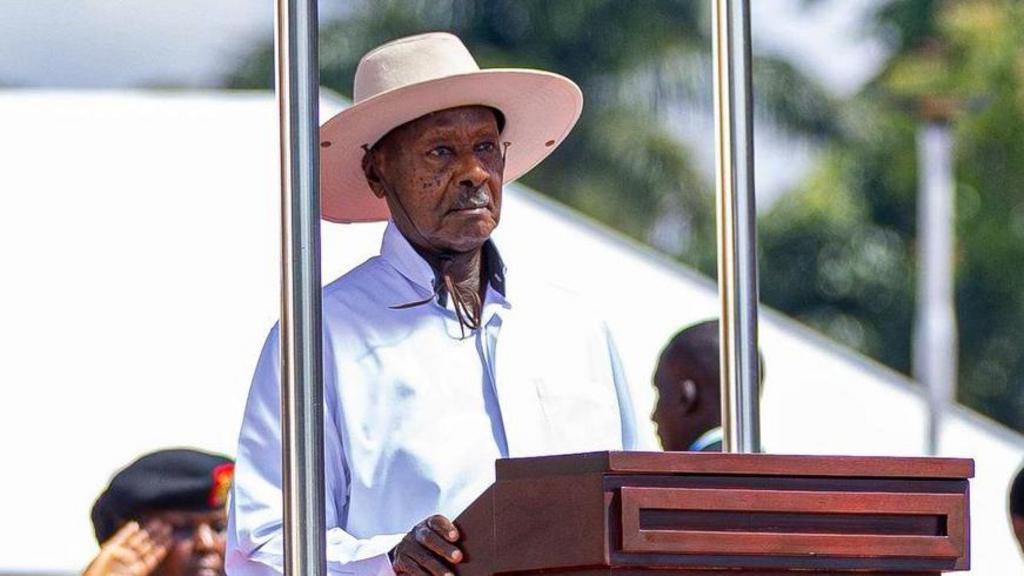
Yoweri Museveni, 81, was sworn in for a record seventh term as President of Uganda on May 29, 2021, extending a tenure that began in 1986 and now spans four decades of rule.
The January 2021 elections, marred by allegations of ballot stuffing, intimidation, and a heavy security presence, were contested by opposition leader Bobi Wine, whose campaign galvanized urban youth. Museveni’s victory, confirmed by the Constitutional Court, underscores the durability of a political system that has increasingly centralized authority around the president and the ruling National Resistance Movement (NRM).
Beyond the immediate power shift, the election highlighted the tension between a youthful, digitally connected populace demanding change and an entrenched elite that has cultivated patronage networks and co‑opted key state institutions. The NRM’s dominance, reinforced by constitutional amendments that removed term limits in 2005, reflects a broader pattern across parts of Africa where incumbents manipulate legal frameworks to perpetuate rule.
Contextualizing Museveni’s resurgence within the East African landscape reveals a mix of economic liberalization, infrastructure investment, and persistent corruption. While Uganda has experienced relatively steady GDP growth, the benefits have been uneven, fueling discontent among marginalized regions. The president’s continued grip suggests that policy continuity—particularly in security and foreign investment—remains a priority, even as regional dynamics, such as the rivalry with Rwanda and shifting alliances in the Horn of Africa, could test his administration’s resilience.
Moreover, the upcoming 2026 elections will be scrutinized by both domestic watchdogs and international partners, raising the stakes for any credible opposition to challenge the status quo.