Back to home
INTERNATIONAL13 July 2026
The $30 Million T. rex: When a Prehistoric Predator Becomes a Financial Asset
A 67‑million‑year‑old Tyrannosaurus rex is set for a $30 million auction in New York, raising questions about the intersection of high‑value fossil sales and scientific research. The transaction highlights broader trends in the commodification of natural history and may influence future policies on fossil ownership.
La
La Rédaction
The Vertex
5 min read
Source: www.bbc.co.uk
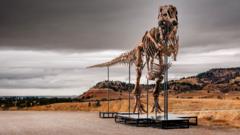
A 67‑million‑year‑old Tyrannosaurus rex is slated for auction in New York with a pre‑sale estimate of $30 million, positioning it as the most expensive fossil ever offered on the market. The specimen, whose skeleton is nearly complete, has been meticulously prepared by a private laboratory and will be presented to prospective buyers at a high‑profile event in Manhattan.
Scientists warn that the commercial transfer of such a rare specimen threatens the integrity of paleontological research. Access to intact T. rex material is indispensable for studying growth patterns, biomechanics, and evolutionary relationships, yet the high price tag may restrict it to a handful of wealthy collectors. Historically, fossils like “Sue” have fetched tens of millions, sparking debates over the balance between market value and public scientific benefit. Legal frameworks governing the export and ownership of vertebrate fossils vary across jurisdictions, complicating efforts to ensure that valuable specimens remain available for academic study.
The sale reflects a broader trend in which natural‑history objects are increasingly treated as luxury assets, driven by affluent collectors in Asia and the Middle East. This shift mirrors the commodification of art and rare books, raising ethical questions about who controls the narrative of Earth’s deep past. As auction houses expand their catalogs, the risk of further inflating prices threatens to marginalize smaller institutions and diminish the diversity of research samples.
Looking ahead, the T. rex auction may set a precedent for ever higher valuations of prehistoric remains. It could prompt stricter regulations, increased collaboration between museums and private owners, or the emergence of new financing models that preserve scientific access while acknowledging market realities.