Back to home
INTERNATIONAL5 July 2026
Guam Braces for Super Typhoon Bavi: A Strategic Evacuation Amidst Unprecedented Wind Threats
Super Typhoon Bavi is forecast to strike Guam with winds over 160 mph and waves near 11 m, prompting urgent evacuations of coastal areas. The storm exemplifies a growing trend of intensifying Pacific cyclones, challenging regional preparedness.
La
La Rédaction
The Vertex
5 min read
Source: www.bbc.co.uk
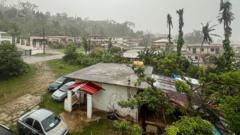
Guam’s residents are scrambling to leave low‑lying coastal neighborhoods as Super Typhoon Bavi barrels toward the island, with forecasts predicting sustained winds exceeding 160 mph and storm surges reaching nearly 11 metres when the system makes landfall on Monday. The evacuation orders, issued by the Governor’s Office, target areas vulnerable to flooding and structural damage, underscoring the immediacy of the threat.
The storm’s intensity reflects a rare meteorological convergence: a tightly wound vortex combined with a deep pressure gradient that amplifies wind speeds far beyond typical typhoon thresholds. Waves of 11 m, equivalent to a multi‑storey building, pose a severe risk to port facilities, bridges and the island’s critical electricity grid. Historical data show that Guam has experienced destructive typhoons, yet Bavi’s projected parameters place it among the most powerful to threaten the territory in recent decades.
Bavi’s approach fits a broader pattern of intensifying Pacific storms, a trend scientists link to rising sea surface temperatures and changing atmospheric dynamics. While the region has traditionally relied on robust building codes and emergency drills, the scale of Bavi tests the limits of existing preparedness frameworks and highlights the need for adaptive measures such as reinforced shelters and real‑time monitoring systems.
In the coming days, the effectiveness of Guam’s evacuation strategy will be scrutinised, not only for its immediate life‑saving impact but also for its implications for regional disaster policy. As climate models anticipate more frequent extreme wind events, the island’s experience may serve as a bellwether for how communities worldwide adapt to an era of super‑typhoons.