Back to home
INTERNATIONAL15 May 2026
The Unspoken Pledge: Trump’s Ambiguous Stance on Taiwan’s Defense
Trump declined to specify whether the United States would defend Taiwan, leaving the strategic question unresolved. This ambiguous stance reflects a long‑standing U.S. policy of strategic ambiguity, with significant implications for regional security and U.S.–China relations.
La
La Rédaction
The Vertex
5 min read
Source: www.bbc.com
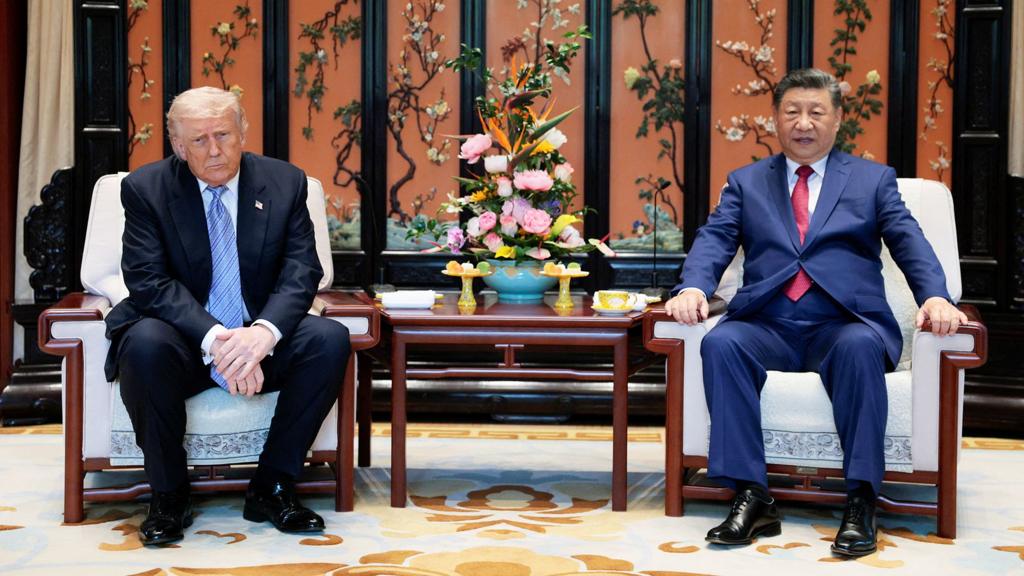
During a recent BBC interview, former President Donald Trump was asked directly whether the United States would defend Taiwan in the event of a Chinese attack. He answered, "I don’t talk about that," leaving the question deliberately unanswered and sparking immediate diplomatic speculation. The comment came amid heightened tensions after Beijing’s recent large‑scale naval drills near the Taiwan Strait, a move that has heightened anxiety across the region.
The remark encapsulates a broader strategic ambiguity that has defined Washington’s Taiwan policy since the 1979 Taiwan Relations Act. By refusing to articulate a definitive commitment, Trump preserves deterrence credibility while avoiding the political costs of an explicit pledge, a calculus that intensifies as Beijing escalates its coercive drills, conducts large‑scale naval exercises, and increases its missile deployments around the Taiwan Strait.
This ambiguity sits within a longer trajectory: from Nixon’s opening to Mao, through Carter’s arms sales, to Obama’s ‘strategic patience.’ Each administration has balanced the need to reassure Taipei with the desire not to provoke Beijing, especially as economic interdependence deepens and the Indo‑Pacific becomes the arena of great‑power competition, with China’s Belt and Road initiatives and the United States’ Quad partnership shaping the strategic landscape.
In the near term, the lack of a clear stance leaves both sides guessing, encouraging incremental pressure from China and cautious modernization of Taiwan’s defenses by the United States. The future will likely hinge on whether Washington can translate rhetorical ambiguity into a credible, calibrated security framework that sustains peace without triggering a flashpoint, a balance that will be tested by evolving Chinese assertiveness and shifting domestic politics in America.