Back to home
INTERNATIONAL13 May 2026
Strategic Convergence: Trump, Xi, and the Multi‑Front Agenda
President Trump arrives in Beijing for a two‑day summit that will address Iran, tariffs, AI and Taiwan, marking a pivotal moment in US‑China relations.
La
La Rédaction
The Vertex
5 min read
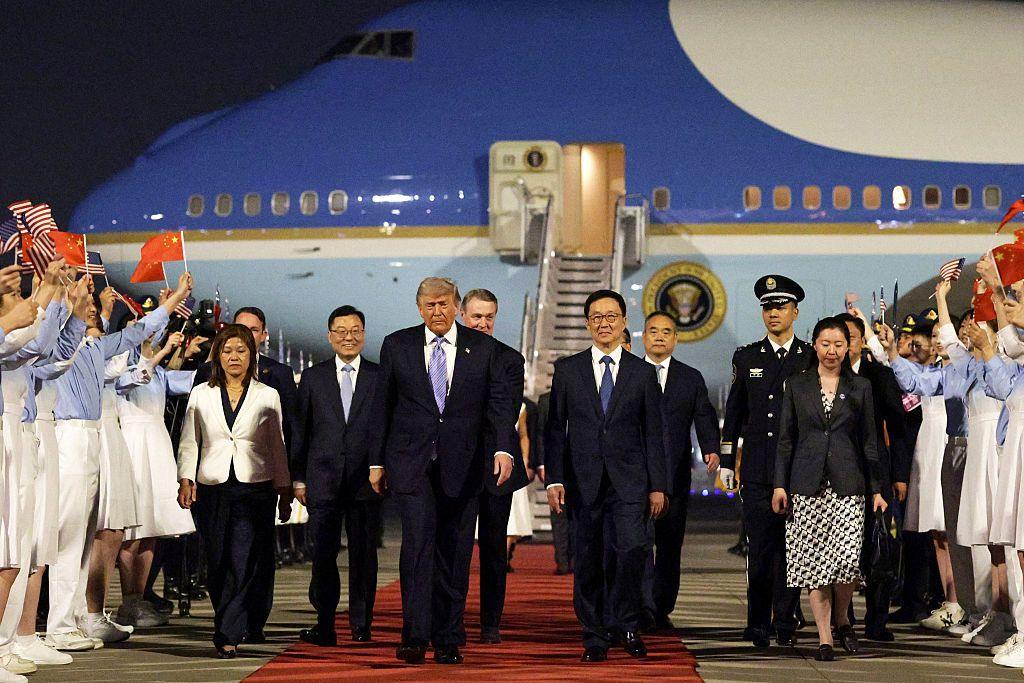
Source: www.bbc.com
President Donald Trump’s arrival in Beijing marks the first high‑level face‑to‑face encounter with Xi Jinping since the 2019 trade dispute, underscoring the volatile state of bilateral relations.
The two‑day summit will hinge on four interlocking dossiers: the escalating conflict in Iran, the lingering tariff war, the race for artificial‑intelligence supremacy, and the flashpoint of Taiwan’s status. On Iran, Washington seeks a diplomatic reset that could curb Tehran’s regional influence, while Beijing aims to preserve its strategic partnership with the Islamic Republic. Tariffs, meanwhile, remain a bargaining chip; both sides have signaled willingness to compromise yet retain leverage for domestic audiences. The AI arena reflects a broader techno‑strategic competition, with each capital vying for standards that could shape global digital governance. Finally, Taiwan’s security perimeter continues to test the limits of the “One China” consensus, as Washington reaffirms its commitment to a rules‑based order.
This meeting fits into a longer trajectory of pragmatic rivalry: from the 2017 “meeting of the minds” to the 2022 sanctions regime, the relationship has oscillated between cooperation and confrontation. The current geopolitical climate—marked by Middle‑East instability, supply‑chain re‑shoring, and the emergence of multipolar blocs—makes the outcome especially consequential. A successful dialogue could temper the trade war, open limited cooperation on AI safety, and stabilize regional flashpoints, whereas a stalemate would reinforce decoupling trends and heighten the risk of miscalculation.
In the coming months, the summit’s communiqué will be scrutinized for signals of a managed rivalry versus a new détente. Its legacy will likely shape the architecture of great‑power interaction for the next decade.