Back to home
INTERNATIONAL17 April 2026
Trump's Lebanon Truce: Israel's Strategic Surprise
Trump's surprise Lebanon ceasefire has caught Israel off guard, exposing tensions between U.S. diplomatic initiatives and Israeli security priorities while raising questions about the effectiveness of American mediation in regional conflicts.
La
La Rédaction
The Vertex
5 min read
Source: www.bbc.com
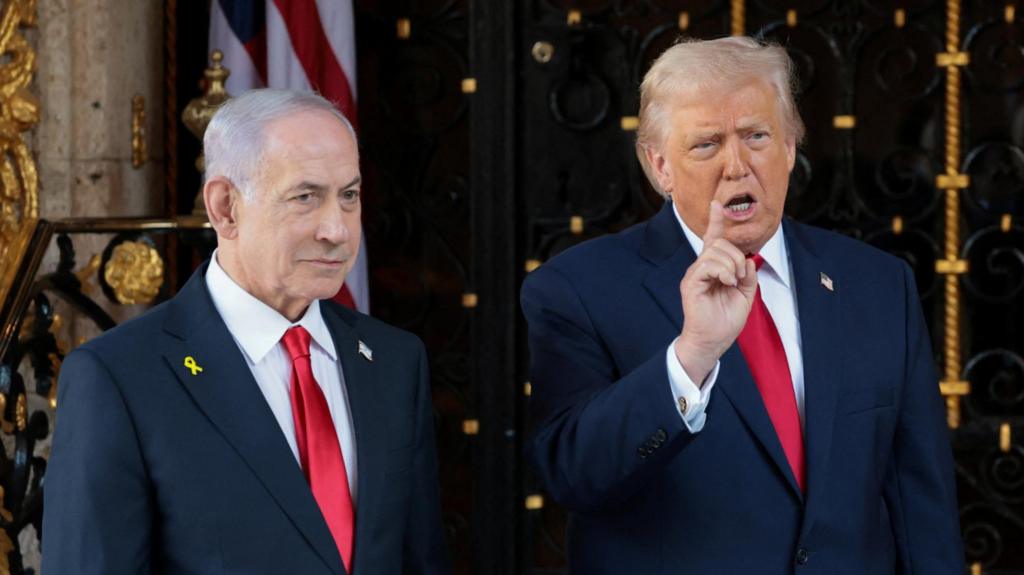
The announcement of a ceasefire in Lebanon brokered under Donald Trump's influence has caught Israel's political and military establishment off guard, revealing deep fractures in regional strategy and alliance dynamics. While the Trump administration frames this as a diplomatic victory, Israeli security analysts view the truce with Hezbollah through a lens of strategic skepticism.
The timing is particularly delicate. Israel has been engaged in escalating tensions with Hezbollah along its northern border, with periodic exchanges of fire threatening to spiral into broader conflict. The Lebanese ceasefire, coming without prior consultation with Israeli counterparts, disrupts what many in Tel Aviv saw as a carefully calibrated approach to containing Iranian influence through its Lebanese proxy.
This diplomatic maneuver exposes several critical tensions. First, it highlights the growing divergence between U.S. diplomatic priorities and Israeli security imperatives. Second, it raises questions about the effectiveness of American mediation when key regional partners are sidelined from the decision-making process. Third, it potentially emboldens Hezbollah by suggesting international pressure can extract concessions without addressing the underlying security concerns that have driven Israeli policy.
The long-term implications remain uncertain. While a ceasefire might temporarily reduce border tensions, it does little to address Hezbollah's substantial military capabilities or Iran's strategic ambitions in the region. For Israel, this development may necessitate a recalibration of its approach to both Hezbollah and its relationship with U.S. diplomatic initiatives, potentially seeking greater autonomy in shaping its security environment.
What emerges is a complex diplomatic chess game where moves made in Washington have immediate and unpredictable consequences for regional security dynamics, leaving Israel to navigate an increasingly uncertain strategic landscape.