Back to home
INTERNATIONAL7 May 2026
Trump’s Iran Gambit Fuels German Economic Slowdown
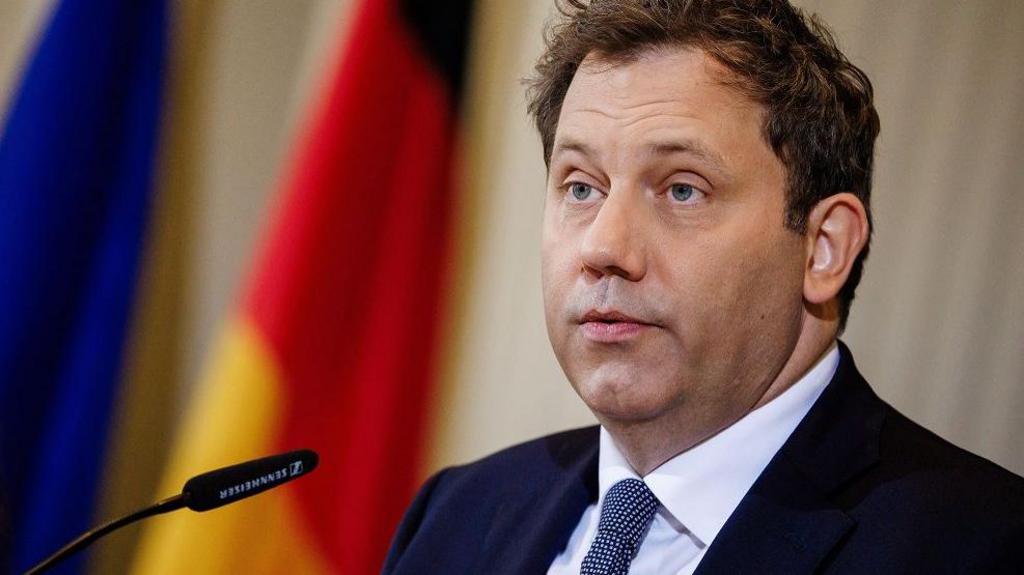
German Finance Minister Lars Klingbeil attributes the country's recent economic slowdown to President Trump's aggressive stance toward Iran. The geopolitical tension has rattled markets and dampened German export demand, raising concerns about sustained growth.
La
La Rédaction
The Vertex
5 min read
Source: www.bbc.com
German Finance Minister Lars Klingbeil has warned that President Donald Trump's irresponsible war in Iran is the primary driver behind Germany's recent economic slowdown.
The accusation places a geopolitical fault line at the heart of Europe's largest economy. By escalating tensions with Tehran, the United States has reopened volatility in oil markets and heightened risk premiums on sovereign bonds, prompting a flight to safety that dampens German export demand. Moreover, the uncertainty surrounding the nuclear negotiations has eroded confidence among multinational firms that rely on stable trade routes through the Strait of Hormuz.
Germany's post-war prosperity has long depended on uninterrupted access to energy and open markets. The 2015 nuclear deal briefly stabilized the region, but Trump's unilateral withdrawal in 2018 reignited a cycle of sanctions and counter-measures that echo the broader pattern of great-power brinkmanship seen after the 2003 Iraq invasion.
Unless Washington de-escalates or the EU develops a credible strategic autonomy in energy and finance, the current trajectory may herald a protracted period of subdued growth. German policymakers are already urging a diversification of supply chains and a deeper integration of European energy markets to mitigate the spill-over effects of distant geopolitical conflicts.
The slowdown has already manifested in weaker industrial output, with the manufacturing PMI slipping below 50 for the first time in two years, and a modest rise in unemployment claims among skilled workers in the automotive and machinery sectors. Consumer confidence, measured by the German Ifo index, has dipped to its lowest level since 2012, reflecting anxieties over both global trade and domestic fiscal constraints. In response, the coalition government is considering targeted fiscal stimulus, while the Bundesbank warns that monetary policy alone may be insufficient to counteract the external shock.