Back to home
INTERNATIONAL10 May 2026
Unacceptable Terms: Trump's Stance on Iran's Elusive Peace Proposal
Trump denounced Iran's response to a still‑unknown US peace proposal as “totally unacceptable,” highlighting a diplomatic deadlock. The lack of details underscores the fragility of current negotiations and the broader stakes for global stability.
La
La Rédaction
The Vertex
5 min read
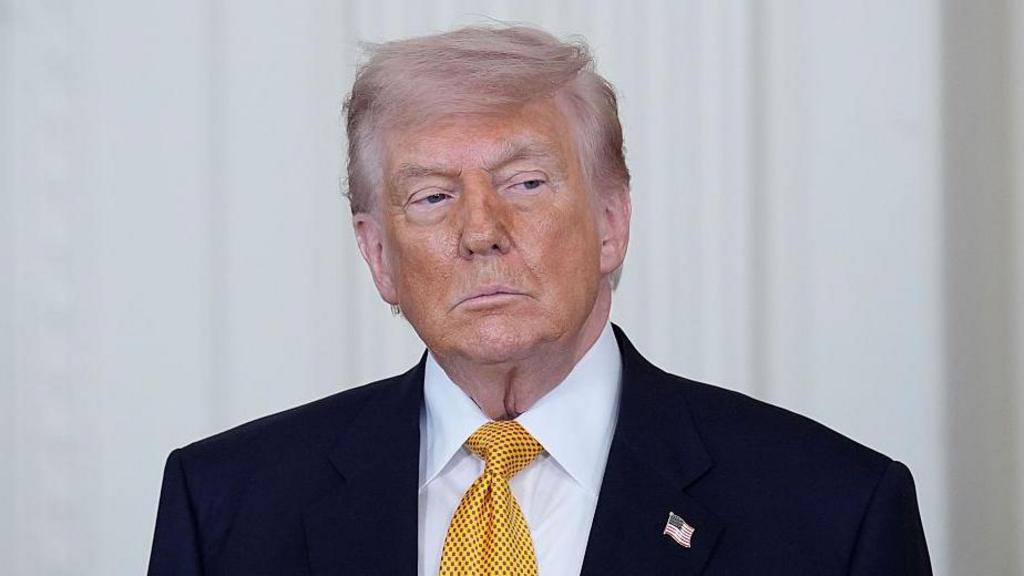
Source: www.bbc.com
President Donald Trump’s recent declaration that Iran’s response to the United States’ undisclosed peace proposal is “totally unacceptable” reverberates far beyond the immediate headline. With no concrete details released about either side’s position, the statement underscores a dangerous impasse in what could become the final chapter of a protracted regional conflict.\n\nThe remark reflects a broader political calculus: Trump is leveraging a hard‑line stance to satisfy a domestic constituency that demands decisive action against Tehran, while simultaneously warning of electoral fallout should any perceived concession be made. Economically, the threat of renewed sanctions looms over Iran’s already strained oil exports, a factor that could exacerbate global energy volatility. Socially, the rhetoric fuels sectarian anxieties across the Gulf, risking escalation among proxy actors that have already stretched the region’s security architecture.\n\nContextualizing this moment requires a glance at the 2015 Joint Comprehensive Plan of Action, whose gradual unraveling after the U.S. withdrawal in 2018 has left diplomatic channels frayed. Iran’s insistence on a comprehensive settlement, juxtaposed with Washington’s ambiguous overtures, illustrates the difficulty of reconciling divergent red lines after years of mutual distrust.\n\nLooking ahead, the next moves will be decisive. If the United States clarifies its proposal and Iran engages constructively, a calibrated diplomatic pathway may emerge, tempering regional volatility. Conversely, a continued deadlock could precipitate further economic pressure, proxy confrontations, and a deeper erosion of any prospects for a durable peace. The stakes extend beyond the immediate bilateral relationship, influencing global non‑proliferation norms and the credibility of multilateral institutions.