Back to home
INTERNATIONAL10 June 2026
Escalating Brinkmanship: Trump’s Warning and Iran’s Retaliation
President Trump warned that Iran will pay a price for delaying a diplomatic settlement, while Tehran vowed retaliation, reviving a familiar cycle of threats that risks regional instability and global energy markets.
La
La Rédaction
The Vertex
5 min read
Source: www.bbc.com
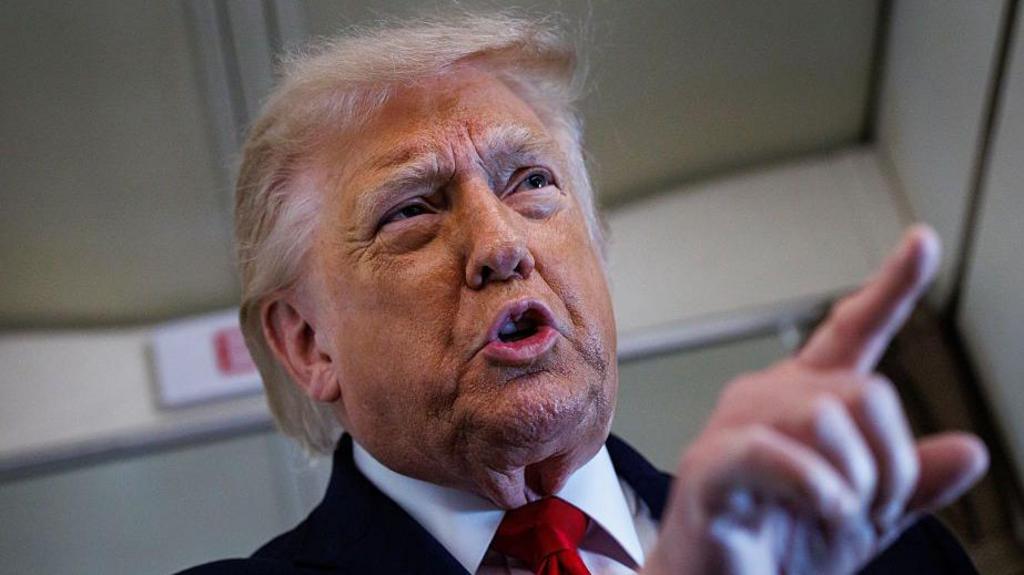
The latest round of United States‑Iranian hostilities has revived a familiar pattern of brinkmanship that has defined the bilateral relationship for decades. After a series of limited missile exchanges, President Donald Trump warned that Tehran “will have to pay the price” if it continues to delay a diplomatic settlement, while Iranian officials reiterated their commitment to retaliate against any further aggression.
Politically, the exchange underscores the divergent calculations of two regimes each facing internal pressures. In Washington, the warning serves to reinforce a hard‑line stance ahead of upcoming midterm elections, appealing to voters skeptical of diplomatic engagement. In Tehran, the defiant posture consolidates the Revolutionary Guard’s narrative of resistance, bolstering its political clout while masking economic distress.
Economically, the saber‑rattling reverberates through energy markets and regional supply chains. Any escalation risks a spike in crude prices, already volatile after recent OPEC+ adjustments, and could further strain the already fragile Iranian economy, which relies heavily on sanctions‑relieved oil exports. European partners, wary of a broader conflict, are pushing for de‑escalation to protect trade routes through the Strait of Hormuz.
Contextually, this flare‑up follows the 2018 withdrawal from the Joint Comprehensive Plan of Action and the subsequent “maximum pressure” campaign that has left diplomatic channels largely dormant. The current exchange reflects a return to the cyclical pattern of threat and counter‑threat that has characterized the relationship since the 1979 revolution, underscoring how quickly diplomatic momentum can evaporate when mutual distrust deepens.
Looking ahead, the trajectory will hinge on whether the United States can translate its rhetorical pressure into a credible diplomatic overture, and whether Iran perceives a strategic benefit in de‑escalation versus a costly confrontation. Miscalculation on either side could trigger a broader regional crisis, while a calibrated reduction of rhetoric may reopen limited negotiations on nuclear constraints and maritime security.