Back to home
INTERNATIONAL20 May 2026
Trump’s Greenland Envoy Tests Diplomatic Limits
Jeff Landry’s diplomatic mission to Greenland quickly became a litmus test for U.S. strategic ambitions in the Arctic, exposing deep tensions between economic interests, political autonomy, and security concerns. His ability to navigate these fault lines will determine whether the United States can build genuine partnerships or risk reinforcing a colonial narrative.
La
La Rédaction
The Vertex
5 min read
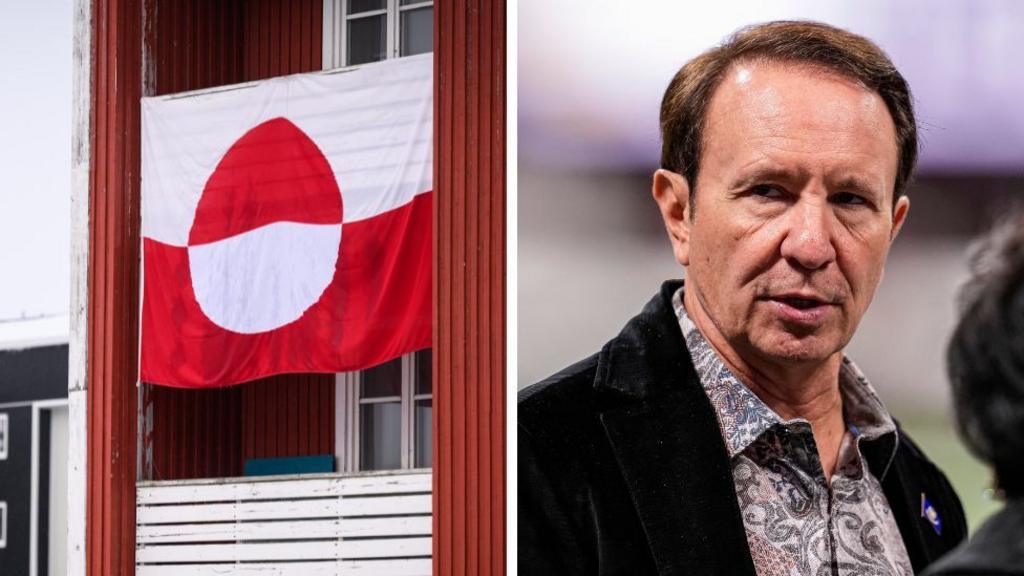
Source: www.bbc.com
Jeff Landry, the newly appointed U.S. envoy to Greenland, arrived in Nuuk with a diplomatic overture that quickly unraveled under the weight of local sensitivities. His mission to cultivate friendship and secure strategic cooperation arrived amid a fraught history of colonial extraction and a recent surge of Greenlandic assertiveness. While the United States seeks access to the Arctic’s untapped mineral wealth and a strategic foothold against rising Chinese influence, Greenlanders view any overture from Washington with suspicion, remembering past U.S. military bases and the 2020 proposal to purchase the island, which was dismissed as a colonial relic.\n\nLandry’s visit highlighted three interlocking tensions. First, economic ambition: the United States is probing the island’s rare‑earth deposits, a resource that could diversify American supply chains but also threatens fragile ecosystems. Second, political autonomy: Denmark, which retains sovereignty, has signaled a willingness to negotiate, yet Greenland’s parliament recently voted to limit foreign exploitation, asserting its right to self‑determination. Third, security calculus: the Arctic is becoming a theater for great‑power competition, and the United States aims to counterbalance Russian and Chinese naval presence, a move that could draw Greenland deeper into geopolitical currents.\n\nThe episode echoes the Cold War era when the United States established Thule Air Base, a reminder that strategic interests have long eclipsed local consent. Today, climate change accelerates Arctic accessibility, turning resource extraction into a race against environmental stewardship and indigenous rights.\n\nIf Landry can navigate these fault lines, offering transparent economic partnerships, respecting Greenlandic self‑governance, and framing cooperation as mutual benefit, his mission may succeed in building genuine ties. The diplomatic stakes are amplified by the broader contest for Arctic dominance, making any misstep costly for U.S. foreign policy. Otherwise, the effort risks reinforcing the narrative that external powers view the Arctic merely as a chessboard, jeopardizing both U.S. credibility and Greenland’s quest for true autonomy.