Back to home
INTERNATIONAL14 May 2026
The First Day: Symbolism and Substance in Trump’s China Visit
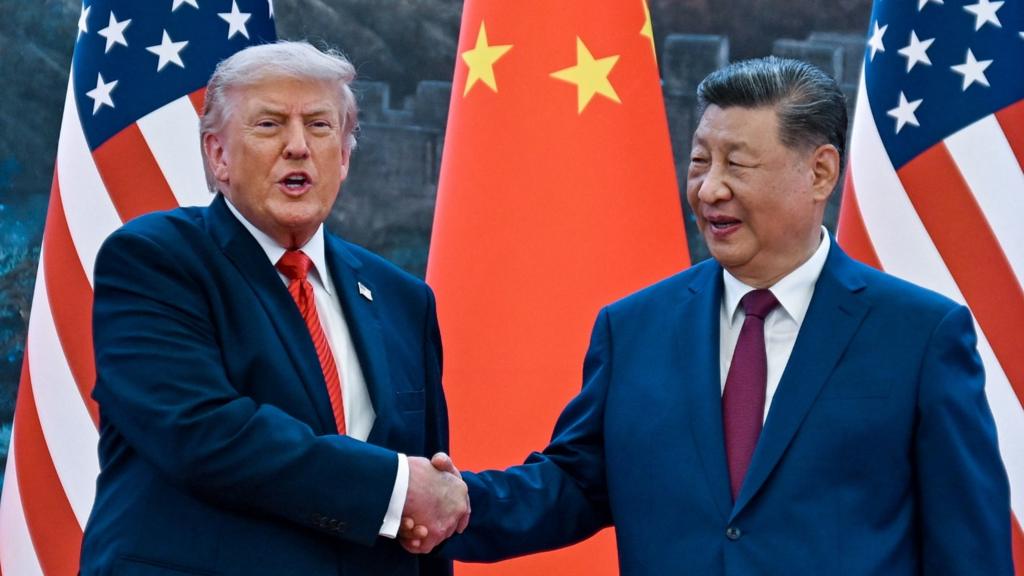
President Trump was welcomed in Beijing with a children’s chorus and a military parade, followed by a two‑hour meeting with Xi Jinping. The visit signals both symbolic gestures and potential substantive steps in a fraught US‑China relationship.
La
La Rédaction
The Vertex
5 min read
Source: www.bbc.com
On Thursday, President Donald Trump was greeted in Beijing by a chorus of schoolchildren and a meticulously choreographed military parade, setting a theatrical tone for the first day of his state visit to China. The spectacle, while designed to showcase China’s soft power, also framed a high‑stakes diplomatic encounter with President Xi Jinping that lasted nearly two hours.
The visit arrives at a moment when both capitals are navigating a fraught economic landscape, marked by lingering tariffs and a push for supply‑chain diversification. Symbolically, the parade underscores Beijing’s desire to present a united front amid Washington’s calls for a “fair” trade deal and heightened security concerns in the Indo‑Pacific. Yet the prolonged bilateral meeting suggests a willingness to move beyond rhetoric, focusing on strategic stability, technology cooperation, and the management of competing spheres of influence.
Contextually, this encounter follows a series of high‑profile summits since 2017, each attempting to temper the growing strategic rivalry that has manifested in trade wars, technology bans, and military posturing. The visit also reflects a broader shift: while the United States seeks to re‑engage on issues of global governance, China aims to solidify its economic corridors and diplomatic outreach across the Global South.
Looking ahead, the outcomes of day one will likely be measured not by headline agreements but by incremental steps—such as renewed dialogue on climate, intellectual property, and maritime security—that could either ease tensions or entrench a new phase of managed competition. The trajectory will hinge on whether both sides can translate ceremonial gestures into concrete policy adjustments.