Back to home
INTERNATIONAL12 July 2026
Legal Pressure on the Press: Trump Administration Subpoenas New York Times over Air Force One Reporting
The Trump administration issued subpoenas to New York Times journalists on July 11, 2026, demanding testimony about a report on alleged security flaws of the president’s new Air Force One, a plane gifted by Qatar.
La
La Rédaction
The Vertex
5 min read
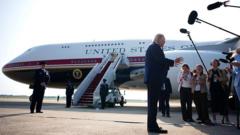
Source: www.bbc.co.uk
In a striking escalation of the Trump administration’s war on media criticism, the Department of Justice issued a subpoena to several New York Times journalists on July 11, 2026, demanding their testimony and records concerning a recent report on alleged security vulnerabilities of the president’s new Air Force One aircraft, which was presented to the United States by Qatar.
The legal summons signals a deliberate attempt to force the press to disclose sources and internal deliberations, thereby blunting the impact of investigative reporting that questions the administration’s procurement decisions and the undisclosed risks associated with the aircraft’s design.
Critics note that the plane, a gift from Qatar, raises geopolitical questions about foreign influence on U.S. executive assets, while the reported security flaws—ranging from cockpit communication vulnerabilities to structural fatigue—could compromise both national prestige and passenger safety, making the story a flashpoint for broader scrutiny of the administration’s transparency.
This episode echoes past confrontations between presidents and the press, from the Pentagon Papers under Nixon to the more recent subpoenas of journalists during the Obama and Biden terms, illustrating a persistent tension between executive secrecy and the public’s right to know.
If the subpoenas survive judicial review, they may set a precedent that curtails investigative journalism on matters of national security, prompting newsrooms to weigh legal risk against editorial duty; conversely, a successful defense could reinforce press independence and deter future administrations from weaponizing the courts. Such a precedent could also embolden other administrations to pursue similar legal avenues, undermining the watchdog role of the Fourth Estate.