Back to home
INTERNATIONAL19 May 2026
Tragedy at the Mosque: Hate, Violence and the Future of Religious Tolerance
Three people were killed in a suspected hate crime at a San Diego mosque, raising urgent questions about the rise of religious intolerance in the United States and the adequacy of current prevention measures.
La
La Rédaction
The Vertex
5 min read
Source: www.bbc.com
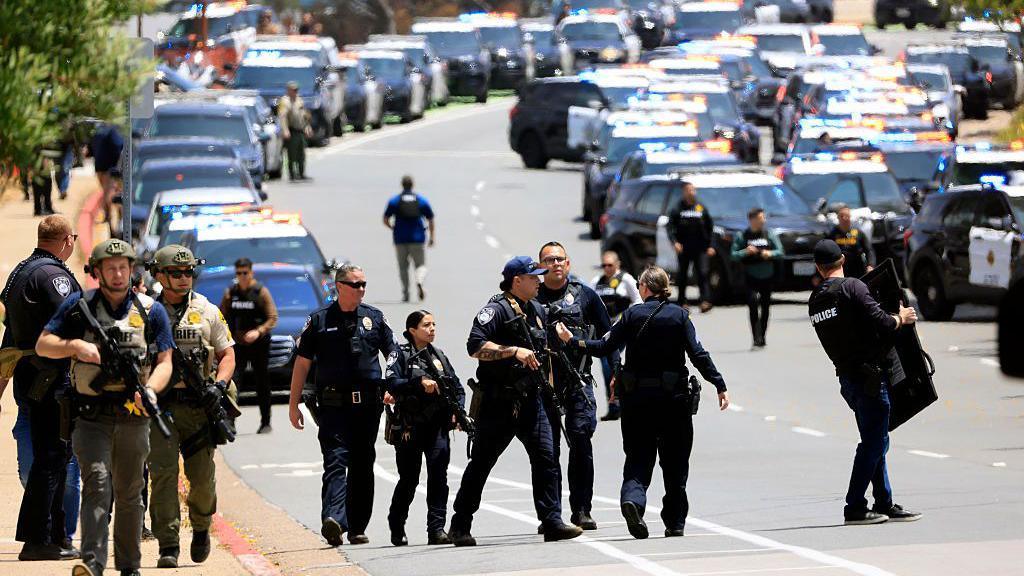
On a quiet Sunday morning in San Diego, three worshippers were killed inside a modest mosque, their lives cut short by a suspected hate‑motivated attack. Police say a note left by one of the teenage suspects contained overt anti‑Muslim rhetoric, pointing to a possible extremist motive. The victims, a family of three including a teenage daughter, were remembered by congregants who gathered later to lay flowers and pray for peace.
Investigators have identified two adolescents, both local residents, who allegedly entered the mosque armed with a handgun and a knife. The suspect’s written statement, described as “general hate rhetoric,” suggests a broader ideological framework rather than a personal grievance. The swift deployment of the FBI and local homicide units underscores the seriousness with which authorities view potential domestic terrorism linked to religious hatred.
These killings echo a disturbing rise in attacks on Muslim institutions across the United States in recent years, a trend fuelled by polarized political discourse and the spread of xenophobic propaganda online. While hate crimes remain a small fraction of overall violent incidents, their symbolic impact reverberates through communities, prompting fear and mobilising interfaith solidarity initiatives that seek to counter isolation and prejudice.
Moving forward, the incident invites scrutiny of law‑enforcement protocols, community outreach, and digital platform regulation. Policymakers face pressure to balance civil liberties with preventive measures, while religious leaders emphasize resilience through dialogue and education. The tragedy may become a catalyst for renewed public commitment to religious tolerance, or it may deepen societal fractures if left unaddressed.