Back to home
INTERNATIONAL12 July 2026
When a 67‑Million‑Year‑Old Tyrannosaur Becomes a $30 Million Auction Lot
A 67‑million‑year‑old Tyrannosaurus rex, projected to fetch $30 million at a New York auction, raises scientific, legal and economic questions about the commodification of prehistoric heritage. The sale may set a precedent for how extinct species are treated as commercial assets.
La
La Rédaction
The Vertex
5 min read
Source: www.bbc.co.uk
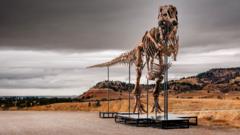
New York is poised to host the sale of a 67‑million‑year‑old Tyrannosaurus rex, a specimen projected to fetch a pre‑sale estimate of $30 million. The auction, organized by a major house in Manhattan, will place the creature among the most valuable natural history objects ever offered on the open market.
For paleontologists, the specimen represents a rare, near‑complete data point that could illuminate aspects of tyrannosaurid morphology, growth rates, and ecological interactions. Yet the commercial commodification raises concerns about scientific access, preservation standards, and the potential for undocumented provenance.
The $30 million price tag underscores a broader trend: fossil collecting has evolved into a high‑net‑worth investment arena, where rare specimens serve both as status symbols and inflation‑hedging assets. Prices for iconic dinosaurs have surged, reflecting a convergence of scarcity, media attention, and wealthy collectors' appetite.
Legal frameworks surrounding cultural heritage complicate the transaction. International conventions, such as UNESCO’s 1970 Convention, restrict the export of significant artifacts, yet enforcement remains uneven, leaving the T. rex’s ownership vulnerable to diplomatic disputes and to the whims of private collectors.
Scientists also worry that the fossil’s removal from its contextual matrix—whether in a museum or a private collection—diminishes its research value, as stratigraphic and sedimentary clues are lost. The tension between market demand and scholarly integrity highlights a paradox at the heart of modern paleontology.
Looking ahead, the sale may set a precedent for how extinct species are treated as commodities, influencing future auctions, museum acquisitions, and even the ethics of field expeditions. If the market continues to inflate prices, it could either fund further research or exacerbate the divide between affluent collectors and the global scientific community.