Back to home
INTERNATIONAL6 July 2026
Super Typhoon Bavi Redefines Resilience on America’s Pacific Outposts
Super Typhoon Bavi battered the Mariana Islands, striking Rota and triggering emergency alerts on Guam on July 6, 2026. The Category 5 storm exposed critical vulnerabilities in U.S. Pacific infrastructure and highlighted the growing threat of intensified cyclones in a warming climate.
La
La Rédaction
The Vertex
5 min read
Source: www.bbc.co.uk
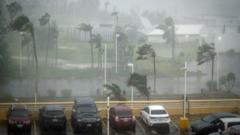
Super Typhoon Bavi, which peaked as a Category 5 system on July 6, 2026, made landfall over the Mariana Islands, directly striking Rota before sweeping toward Guam. The Japan Meteorological Agency recorded sustained winds exceeding 240 km/h, while the storm’s massive eye produced a prolonged period of violent gusts that battered coastal infrastructure. Emergency sirens sounded across Guam as authorities issued mandatory evacuation orders for low‑lying villages, and the U.S. Navy dispatched additional assets to assist with rescue operations.
The ferocity of Bavi exposed the vulnerability of U.S. Pacific territories, where building codes are often calibrated for lesser storm intensities. Power outages affected thousands of residents, and the agricultural sector on Rota suffered catastrophic losses, threatening food security for the island’s 2,000‑plus inhabitants. Moreover, the economic cost of emergency relief, estimated in the hundreds of millions of dollars, underscores the broader fiscal strain on federal disaster budgets.
Placed within the context of a warming climate, Bavi aligns with a trend of intensifying tropical cyclones in the Western Pacific. Scientists link the heightened ocean heat content to rapid deepening of storms, a phenomenon observed in several recent events. The increasing frequency of such super typhoons raises questions about the resilience of U.S. strategic installations, including Andersen Air Force Base on Guam, which remains critical for regional security.
Looking ahead, the incident highlights the necessity for reinforced building standards, expanded early‑warning systems, and coordinated regional response mechanisms. As climate models project more frequent extreme weather, the Pacific islands must adapt their preparedness frameworks to mitigate future impacts and safeguard both civilian lives and geopolitical stability.