Back to home
INTERNATIONAL14 July 2026
The Final Verdict: Sudan's RSF Commander Faces Capital Punishment for War Crimes
Mohamed Hamdan Dagalo, the commander of Sudan’s Rapid Support Forces, has been sentenced to death in absentia along with fifteen senior RSF officers for war crimes committed during the 2023 conflict. The verdict marks a rare instance of judicial accountability in a war that has devastated the country.
La
La Rédaction
The Vertex
5 min read
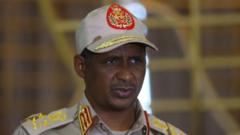
Source: www.bbc.co.uk
The courtroom in Khartoum echoed with a rare moment of judicial finality as Mohamed Hamdan Dagalo, the commander of the Rapid Support Forces (RSF), was sentenced to death in absentia, alongside fifteen senior RSF officers and allied militia leaders. The verdict, handed down on 13 July 2026, marks the first time a senior Sudanese paramilitary figure has faced capital punishment for war crimes committed during the ongoing conflict that erupted in 2023.
While the trial was conducted without the presence of the accused, the court relied on extensive witness testimony, satellite imagery, and forensic evidence to establish systematic atrocities, including mass killings, rape, and the forced displacement of civilians. The decision to impose the death penalty underscores an attempt to break the impunity that has long protected RSF commanders, and it signals a willingness by the transitional justice bodies to pursue the most severe sanctions available.
Sudan’s civil war, pitting the army against the RSF, has resulted in an estimated 150,000 deaths and a humanitarian crisis described by the United Nations as ‘catastrophic’. International bodies such as the International Criminal Court have been stalled by diplomatic disputes, leaving regional mechanisms to fill the gap. The verdict therefore reflects both domestic pressure for accountability and a strategic move to legitimize the fragile transitional authority.
Whether the sentence will translate into actual enforcement remains uncertain, given the RSF’s entrenched power and the ongoing stalemate on the battlefield. Nonetheless, the judgment could serve as a precedent for future prosecutions, potentially influencing peace negotiations and deterring further violations. It also highlights the limits of transitional justice in a context where military might still dominates political authority.