Back to home
INTERNATIONAL1 July 2026
The El‑Fasher Atrocities: RSF’s Crimes Against Humanity as a Litmus Test for International Accountability
Amnesty International’s July 2026 report documents systematic crimes against humanity by Sudan’s Rapid Support Forces in El‑Fasher, echoing UN assessments that the city exhibits genocide‑like hallmarks. The findings expose a entrenched pattern of terror that threatens regional stability and challenges existing accountability mechanisms.
La
La Rédaction
The Vertex
5 min read
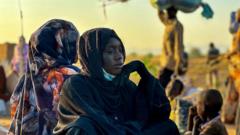
Source: www.bbc.co.uk
Amnesty International’s latest report, released on 1 July 2026, documents systematic violations by the Rapid Support Forces (RSF) in the Darfur city of El‑Fasher, asserting that the militia has committed crimes against humanity.
The findings add to a growing body of testimony that the United Nations has characterised as bearing the hallmarks of genocide, with mass killings, enforced disappearances and the deliberate targeting of civilian infrastructure.
Beyond the immediate human toll, the siege of El‑Fasher has crippled local markets, disrupted aid corridors and deepened the humanitarian catastrophe that already afflicts Darfur, where more than 8 million people rely on external assistance.
The report underscores a pattern that stretches back to the RSF’s 2013 campaign in Darfur and the 2021‑2022 resurgence of violence, revealing a strategic use of terror to consolidate control over territory and resources. International legal mechanisms, from the International Criminal Court to targeted sanctions, have been invoked, yet enforcement remains fragmented. The revelations have intensified pressure on Sudan’s transitional authorities and neighbouring states, prompting renewed calls for a unified diplomatic framework to address the crisis.
If the international community fails to translate these findings into decisive accountability, the cycle of impunity may perpetuate, destabilising not only Sudan but the broader Horn of Africa, where militia‑driven violence erodes state legitimacy and fuels regional spill‑over. Moreover, the lack of coordinated international response hampers the deployment of peacekeeping forces, leaving civilians exposed to further atrocities.
The coming months will test whether the International Criminal Court can secure jurisdiction or whether regional actors will prioritize short‑term stability over justice.