Back to home
INTERNATIONAL1 July 2026
RSF Accused of Crimes Against Humanity in El‑Fasher, Amnesty Says
Amnesty International has accused the Rapid Support Forces of committing crimes against humanity in El‑Fasher, Sudan, with the United Nations warning the city shows genocide‑like characteristics. The report documents mass killings, sexual violence and forced displacement, raising urgent questions about accountability and future peace.
La
La Rédaction
The Vertex
5 min read
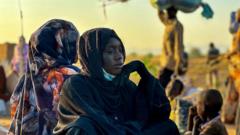
Source: www.bbc.co.uk
Amnesty International’s latest report has placed the Rapid Support Forces (RSF) at the centre of systematic violations of international law in the Sudanese capital of el‑Fasher, accusing the paramilitary of committing crimes against humanity. The findings, released on 1 July 2026, add to a growing body of evidence that the city has become a theatre of mass atrocities, with the United Nations warning that el‑Fasher displays the hallmarks of genocide.
According to Amnesty, RSF fighters have perpetrated extrajudicial killings, widespread sexual violence, and forced displacement of civilians on a scale that contravenes the 1948 Genocide Convention. Victims’ testimonies describe systematic raids on neighbourhoods, the burning of homes, and the execution of men, women and children who refuse to comply with the group’s demands. The report documents at least 150 alleged incidents in the first half of 2026 alone, suggesting a coordinated campaign rather than isolated excesses.
The United Nations has repeatedly characterised el‑Fasher as bearing the hallmarks of genocide, citing patterns of intent, the targeting of civilian groups, and the deliberate destruction of community infrastructure. While the UN stopped short of a formal genocide determination, its assessment underscores the severity of the situation and the risk of escalating ethnic cleansing across Darfur.
Accountability remains elusive. The International Criminal Court (ICC) has opened a preliminary examination, but the RSF’s entrenched power and the fragmented nature of the conflict impede swift justice. Regional actors, including neighboring Chad and the Arab League, have been urged to mediate, yet their interests often align with the status quo, limiting external pressure.
The report’s revelations signal a critical juncture for Sudan’s fragile transition. Without robust international mechanisms to investigate and prosecute the RSF, the cycle of impunity may persist, jeopardising any prospects for lasting peace and reconciliation in the region.