Back to home
INTERNATIONAL16 July 2026
A Special Inquiry into the Murder of an Anti-Migrant Provincial Leader in South Africa
A special police unit has been formed to investigate the fatal shooting of a provincial anti-migrant leader in South Africa, who died in hospital days after the attack. The case highlights deepening xenophobic tensions and the state’s response to politically charged violence.
La
La Rédaction
The Vertex
5 min read
Source: www.bbc.co.uk
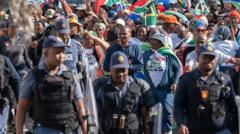
A special police unit has been commissioned to investigate the fatal shooting of a provincial leader who openly advocated anti-migrant sentiment in South Africa. The victim succumbed to his injuries in a hospital days after the attack, underscoring the volatility of the nation’s ongoing xenophobic tensions.
The deceased, identified as the March provincial convenor of a nationalist movement, had built a reputation for inflaming hostility toward foreign residents, especially those from neighboring Zimbabwe and Mozambique. His rhetoric, amplified through social media and local rallies, contributed to a climate where violence against migrants was increasingly tolerated, if not encouraged, by fringe elements within the community.
Authorities responded by establishing a dedicated investigative team, drawing officers from both the provincial police and the national crime bureau. The move signals an acknowledgment that the incident is not merely a criminal act but a symptom of deeper societal fractures, prompting a rare convergence of political actors demanding swift justice to avert further radicalization.
The outcome of this inquiry may reshape the political calculus surrounding migration policy in South Africa, testing the balance between hard‑line rhetoric and inclusive governance. If the police uncover complicity or systemic failures, it could trigger renewed calls for accountability, influencing upcoming elections and the broader discourse on xenophobia.
Economically, the incident spotlights the precariousness of South Africa’s labor market, where many migrants fill essential roles in agriculture and construction. A climate of hostility not only endangers lives but also risks disrupting supply chains, potentially exacerbating unemployment and fueling informal economies that thrive on exploitation. The special police team’s mandate, therefore, extends beyond criminal prosecution to include safeguarding the rule of law in sectors where migrant workers are vulnerable.