Back to home
POLITICS16 April 2026
South Africa's Julius Malema: A Five-Year Sentence That Shakes the Political Landscape
Julius Malema's five-year prison sentence represents a watershed moment in South African politics, challenging the country's democratic institutions and raising questions about political accountability and economic inequality.
La
La Rédaction
The Vertex
5 min read
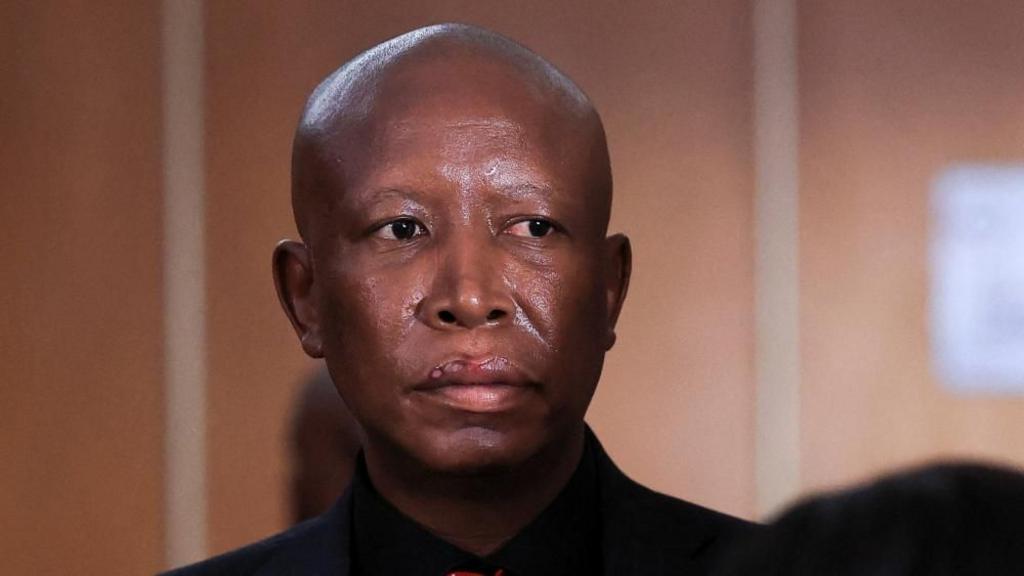
Source: www.bbc.com
The sentencing of Julius Malema, leader of the Economic Freedom Fighters (EFF), to five years in prison marks a pivotal moment in South Africa's post-apartheid political evolution. Malema, once a protégé of President Jacob Zuma, has transformed into one of the most polarizing figures in South African politics, championing radical economic redistribution and land reform.
The conviction stems from charges of money laundering and racketeering, allegations that Malema has consistently denied as politically motivated. His supporters view the sentence as an attempt to silence a powerful critic of the African National Congress (ANC), while opponents argue it demonstrates the rule of law finally catching up with a controversial figure.
Malema's rise from ANC Youth League leader to head of the EFF represents the fragmentation of South Africa's political landscape. His party, founded in 2013, has gained significant traction among young, unemployed South Africans disillusioned with the ANC's inability to deliver on promises of economic equality. The EFF's red berets have become a symbol of radical opposition, challenging both the ANC and more moderate opposition parties.
The timing of this sentence is particularly significant as South Africa approaches its next election cycle. Malema's absence from the political arena could dramatically reshape the opposition landscape, potentially benefiting the Democratic Alliance or leaving a vacuum that other radical voices might fill. The EFF's future without its charismatic leader remains uncertain, raising questions about the party's cohesion and electoral prospects.
As Malema appeals the decision, South Africa watches closely. This case transcends individual justice, touching on fundamental questions about political accountability, economic inequality, and the future direction of the continent's most industrialized democracy.