Back to home
INTERNATIONAL16 May 2026
The Elimination of Abu‑Bilal al‑Minuki: A Turning Point in the Global Counter‑Terrorism Campaign
President Trump announced the death of Abu‑Bilal al‑Minuki in a joint US‑Nigerian raid, marking a strategic shift toward localized counter‑terrorism cooperation. The operation highlights both the tactical gains and the challenges of sustaining stability in the Sahel.
La
La Rédaction
The Vertex
5 min read
Source: www.bbc.com
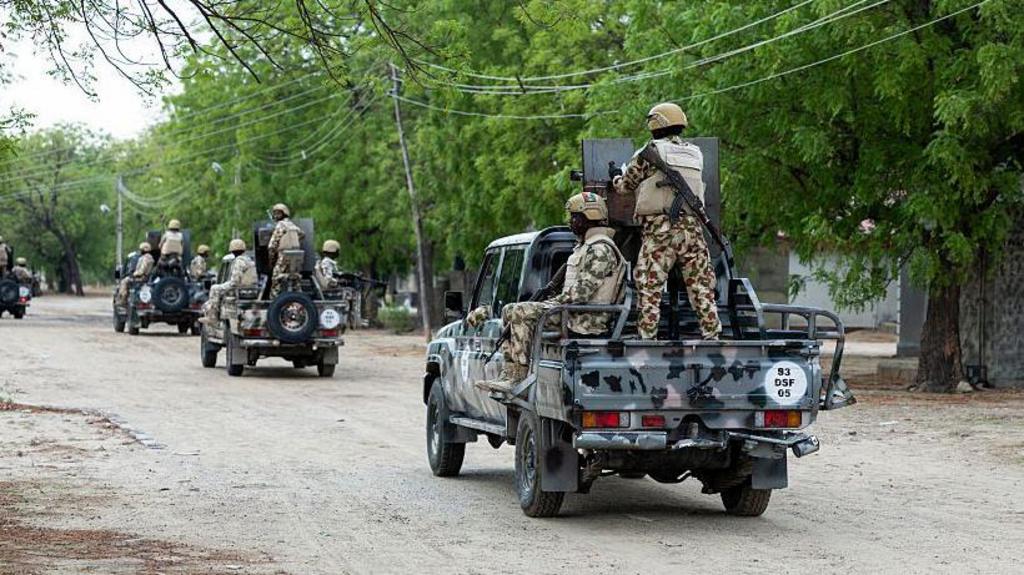
In a rare public acknowledgment, President Donald Trump announced that a joint United States‑Nigerian raid had eliminated Abu‑Bilal al‑Minuki, the most active IS operative believed to be orchestrating attacks across the Sahel. The operation, carried out in a remote desert location, marks a decisive moment in the contested battle against the group’s decentralized network.
Al‑Minuki’s death underscores the growing willingness of Washington to partner with regional forces, even as the United States recalibrates its counter‑terrorism posture after years of reliance on drone strikes and special‑operations teams. By embedding U.S. intelligence and logistical support within a Nigerian-led assault, the raid illustrates a shift toward a more hands‑on, coalition‑based approach, aiming to exploit local knowledge while mitigating the perception of foreign occupation.
The Sahel has become the new frontline of IS expansion, with affiliates such as Boko Haram and the Islamic State in West Africa (IS‑WA) exploiting weak governance and porous borders. Al‑Minuki, reported to have directed financing and recruitment, represented a critical node linking these groups. His removal may disrupt operational continuity, but the underlying conditions—state fragility, unemployment, and ideological appeal—remain fertile ground for resurgence.
Looking ahead, the elimination offers a short‑term boost to regional security and bolsters the narrative of progress in the fight against terrorism. However, it also risks prompting retaliatory attacks and tests the durability of the U.S.–Nigeria partnership. Sustained diplomatic engagement, capacity‑building for Nigerian forces, and a comprehensive strategy that addresses root causes will be essential to translate this tactical victory into a lasting strategic advantage.