Back to home
INTERNATIONAL30 June 2026
Senegalese MPs Move to Clip Presidential Powers Amid Growing Tensions
Senegal’s parliament has approved a constitutional amendment aimed at curbing presidential powers, sparking street protests. The move reflects growing demands for legislative oversight amid rising political tension in the West African nation.
La
La Rédaction
The Vertex
5 min read
Source: www.bbc.co.uk
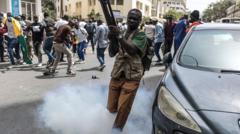
On June 30, 2026, a crowd of demonstrators gathered outside Senegal’s National Assembly, chanting against a parliamentary vote that sought to curtail the president’s authority. The measure, endorsed by a decisive majority of MPs, proposes to limit the head of state’s ability to issue decrees without parliamentary approval and to tighten oversight of the executive’s budgetary prerogatives.
The reforms, championed by the ruling coalition, aim to rebalance powers stipulated in the 2001 constitution, which currently grants the president expansive emergency powers. By requiring a two‑thirds parliamentary vote for any executive order and by mandating prior scrutiny of the national budget, the legislation would embed legislative checks that have been absent in practice. Legal scholars warn that the amendment could be vulnerable to judicial review, yet the current composition of the constitutional council, appointed largely by the president, may render such challenges ineffective.
Senegal’s political landscape has long oscillated between strong presidential rule and nascent democratic institutions. Since the return to multiparty politics in 1990, presidents have repeatedly invoked Article 24 to govern by decree, a practice that critics argue erodes separation of powers. Recent years have seen heightened scrutiny from civil society and regional bodies such as the Economic Community of West African States, which have urged reforms to safeguard democratic norms. The current move reflects both domestic pressure and a broader West African trend toward constitutional balancing.
If enacted, the amendment could redefine the balance of power, enhancing parliamentary authority and potentially curbing executive overreach. However, the political calculus remains uncertain: the president’s party holds a slim majority, and dissent within the legislature may resurface if public protests intensify. The episode underscores a fragile moment in Senegal’s democratic trajectory, where institutional reforms may either stabilize the polity or provoke further polarization.