Back to home
INTERNATIONAL4 April 2026
Ukraine Market Strike: A Calculated Escalation in Russia's War Strategy
A Russian drone strike on a Ukrainian market killed five civilians, highlighting Moscow's strategy of targeting civilian infrastructure to erode Ukrainian morale. The attack raises serious questions about international law enforcement and humanitarian consequences.
La
La Rédaction
The Vertex
5 min read
Source: www.bbc.com
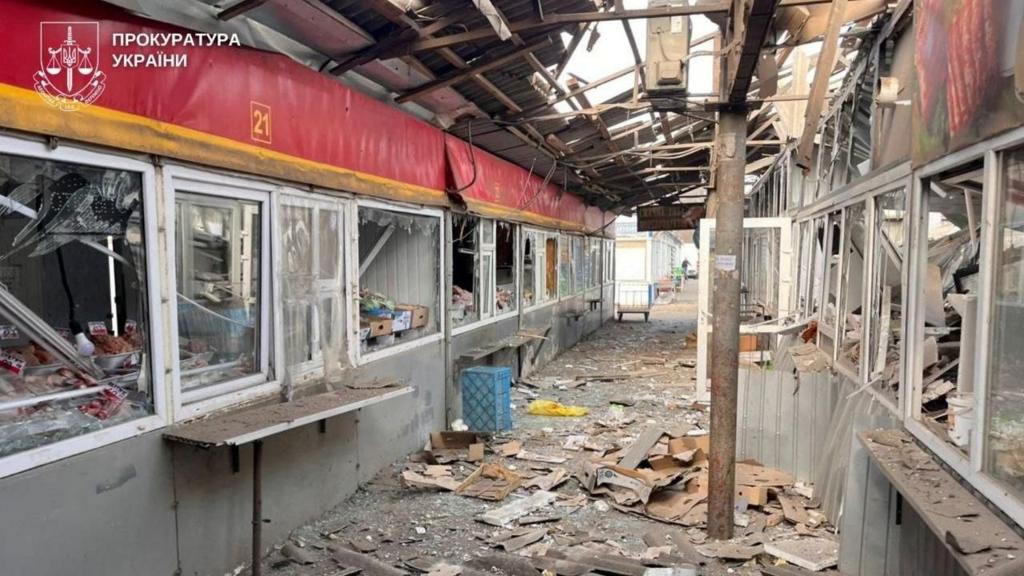
In a chilling demonstration of modern warfare's brutality, a Russian drone strike on a crowded market in southern Ukraine killed five civilians and injured 21 others on Saturday morning. This attack, targeting a civilian gathering place during peak hours, represents a disturbing pattern in Moscow's evolving military doctrine.
The timing and location suggest strategic calculation rather than battlefield necessity. Ukrainian officials report the strike hit when the market was most active, maximizing civilian casualties. This methodology mirrors previous Russian operations that deliberately target civilian infrastructure to erode public morale and pressure Kyiv's resolve.
International law experts note this attack likely constitutes a war crime under the Geneva Conventions, which explicitly prohibit targeting civilians and civilian objects. Yet the international community's response remains largely rhetorical, raising questions about the effectiveness of current deterrence mechanisms.
This incident occurs against the backdrop of Russia's intensifying campaign of aerial attacks on Ukrainian cities. Military analysts observe that as conventional battlefield advances stall, Moscow increasingly relies on standoff weapons and drone strikes to maintain pressure on Ukrainian civilian centers.
The attack's psychological impact extends beyond immediate casualties. Each strike on civilian targets aims to normalize violence and create a climate of perpetual fear. However, Ukrainian resilience appears undiminished, with local authorities already coordinating recovery efforts and vowing continued resistance.
As winter approaches, the humanitarian implications grow more severe. Civilian infrastructure damage compounds existing challenges in energy supply and basic services, potentially creating a humanitarian crisis that could spill across European borders.