Back to home
INTERNATIONAL31 May 2026
The Shadow of the Unseen: Fear Grips a Romanian Neighborhood After a Drone Incident
A drone strike on a residential block in Cluj‑Napoca has left residents uneasy, exposing gaps in Romania’s drone regulation and reflecting broader European concerns over urban airspace security. The incident underscores the need for balanced policy that protects citizens while fostering responsible technological use.
La
La Rédaction
The Vertex
5 min read
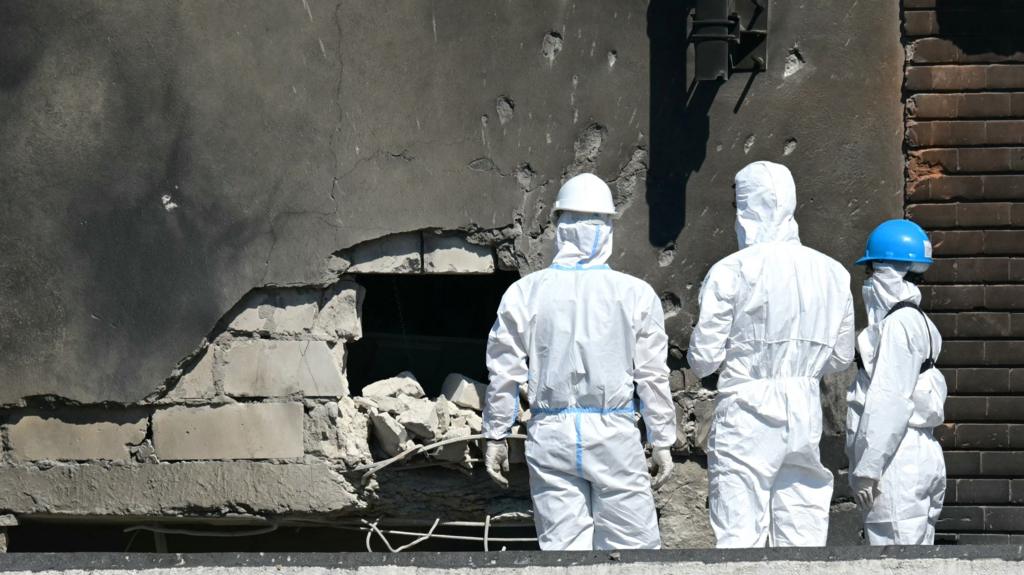
Source: www.bbc.com
Early Friday morning, a low‑flying drone struck the roof of a residential block in the outskirts of Cluj‑Napoca, shattering windows and sending a plume of dust into the street. Residents, who had been forced to evacuate, are now cautiously returning to assess damage, their faces reflecting a mixture of relief and lingering dread.
The incident exposes a glaring gap in Romania’s emerging drone regulatory framework. While the European Union has begun harmonising airspace rules, enforcement remains fragmented, leaving municipalities vulnerable to unauthorized flights that can jeopardise public safety and property. The psychological impact is palpable: a recent survey by the city’s civil protection office indicated that 68 % of respondents feel “less safe” in their own neighbourhoods, a sentiment that could translate into reduced civic participation and heightened demand for private security solutions.
This episode fits into a broader European pattern where hobbyist drones, delivery platforms, and surveillance craft intersect over urban spaces. Since 2020, the European Aviation Safety Agency has recorded a 45 % rise in reported drone incidents near populated areas, prompting debates over privacy, noise pollution, and the balance between innovation and security. In Romania, the rapid expansion of e‑commerce and the proliferation of low‑cost quadcopters have amplified these tensions, making the Cluj‑Napoca case a microcosm of a continent‑wide reckoning.
Looking ahead, policymakers must craft nuanced legislation that deters malicious misuse without stifling legitimate applications such as cinematography or emergency response. Community‑led monitoring programmes and stricter no‑fly zones around sensitive sites could restore confidence, while public dialogue on the ethical limits of aerial surveillance will be essential to prevent the current climate of fear from becoming a permanent feature of urban life.