Back to home
INTERNATIONAL7 July 2026
Resistance and revenge: Iran’s farewell to Khamenei
Iran staged a three‑day public mourning in Tehran, turning the funeral of Ayatollah Ali Khamenei into a political spectacle meant to signal unity and defiance. The event, broadcast worldwide, underscores the regime’s strategy of using ritual to cement power amid succession uncertainty.
La
La Rédaction
The Vertex
5 min read
Source: www.bbc.co.uk
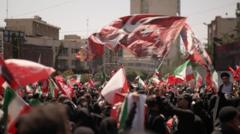
Three days of public mourning in Tehran turned the capital into a staged tableau, a political spectacle that Iran’s leaders deliberately broadcast to the world, according to BBC correspondent Lyse Doucet. The funeral rites for Ayatollah Ali Khamenei, who died on 4 July 2026, were meticulously choreographed: massive crowds filled the streets, black banners fluttered over the squares, and state television aired emotive footage of mourners reciting Qur’anic verses. Though presented as a tribute, the ceremony’s primary aim was to project a unified national resolve at a time of succession uncertainty.
The choreography of grief served multiple strategic purposes. Domestically, it projected continuity and stability to a populace wary of power vacuums, reinforcing the legitimacy of the supreme leader’s chosen successor. Internationally, the prolonged display signalled defiance, warning that Iran would not yield to external pressure amid sanctions and diplomatic isolation. The visual narrative also warned dissenting factions that any challenge would be met with a forceful, retaliatory response, thereby consolidating internal cohesion through shared mourning.
Historically, Iran has used funeral rites to cement political narratives, from the 1979 revolution’s martyr commemorations to recent state‑orchestrated vigils for military figures. By framing Khamenei’s death as a collective sacrifice, the regime binds national identity to his legacy while pre‑emptively shaping the terms of his succession, a pattern that underscores the symbolic weaponisation of grief in authoritarian governance. Such rituals also serve to rally external allies, reinforcing Iran’s narrative of resilience in the face of isolation.
Whether this spectacle translates into genuine political support for the next generation of leaders remains uncertain. If the mourning campaign sustains solidarity and mitigates economic discontent, the transition may be smoother; however, lingering succession disputes, regional tensions, and popular unrest could ignite conflict, making Iran’s farewell both a message of resistance and a prelude to revenge.