Back to home
INTERNATIONAL10 May 2026
Putin Signals a Possible Endgame in Ukraine, Yet Western Support Remains a Sticking Point
Putin claimed the war in Ukraine may be nearing its end, hinting at renewed talks, while the West continues to back Kyiv amid sanctions and military aid. The statement reflects both Russia’s strategic calculations and the enduring geopolitical divide.
La
La Rédaction
The Vertex
5 min read
Source: www.bbc.com
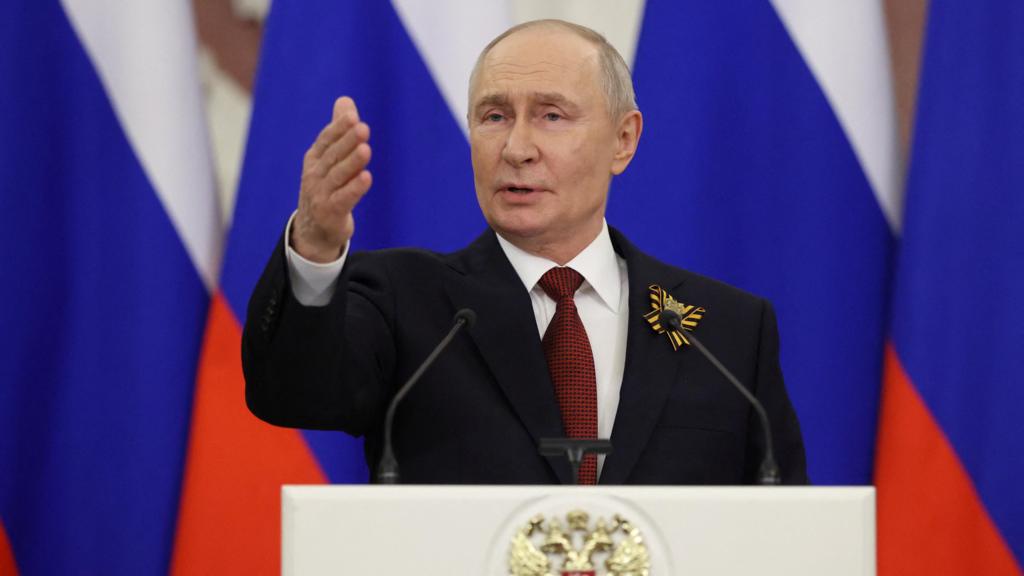
In a recent televised address, Russian President Vladimir Putin recently asserted that the war in Ukraine appears to be drawing to a close, hinting at a potential return to negotiations. Speaking in a televised address, he framed Moscow’s objectives as increasingly attainable and signaled a willingness to engage Kyiv and its Western backers diplomatically, noting that the timing follows mixed battlefield outcomes that have complicated Russia’s military assessment. The statement also reflects Russia’s attempt to leverage any potential settlement to secure recognition of its annexed territories, a condition that remains contested internationally.
From a political standpoint, Putin’s optimism reflects internal calculations: a war‑wearied elite, mounting economic strain, and the desire to legitimize his rule ahead of forthcoming domestic considerations. Militarily, the stalemate on the front lines, coupled with Russia’s strategic depth advantage, bolsters the perception that further advances are possible without prohibitive costs. Yet the reliance on external support from the West remains a critical variable, as continued aid to Kyiv could either prolong the conflict or compel Moscow to seek a negotiated settlement.
Since the invasion in February 2022, Western states have coordinated unprecedented sanctions and supplied Ukraine with advanced arms, bolstering Kyiv’s battlefield and diplomatic leverage. The NATO‑Moscow rivalry has intensified, so any concession now looks like a strategic weakness for Russia. The current stalemate also reflects a broader pattern seen in previous Russian conflicts, where diplomatic overtures have often been used to regroup forces rather than signal genuine surrender.
The coming weeks will test whether Putin’s confidence translates into concrete gestures, such as ceasefire proposals or territorial concessions, or merely serves as a rhetorical lever in ongoing negotiations. While a negotiated settlement remains uncertain, the shift in tone signals a potential recalibration of the conflict’s trajectory, with profound implications for European security architecture and the future of international law.