Back to home
INTERNATIONAL22 April 2026
Pope Leo's Stark Condemnation: Human Rights Under Scrutiny in Equatorial Guinea
Pope Leo XIV's scathing criticism of Equatorial Guinea's prison conditions during his African tour marks a bold departure from diplomatic norms, potentially signaling a new era of papal engagement in human rights issues across the continent.
La
La Rédaction
The Vertex
5 min read
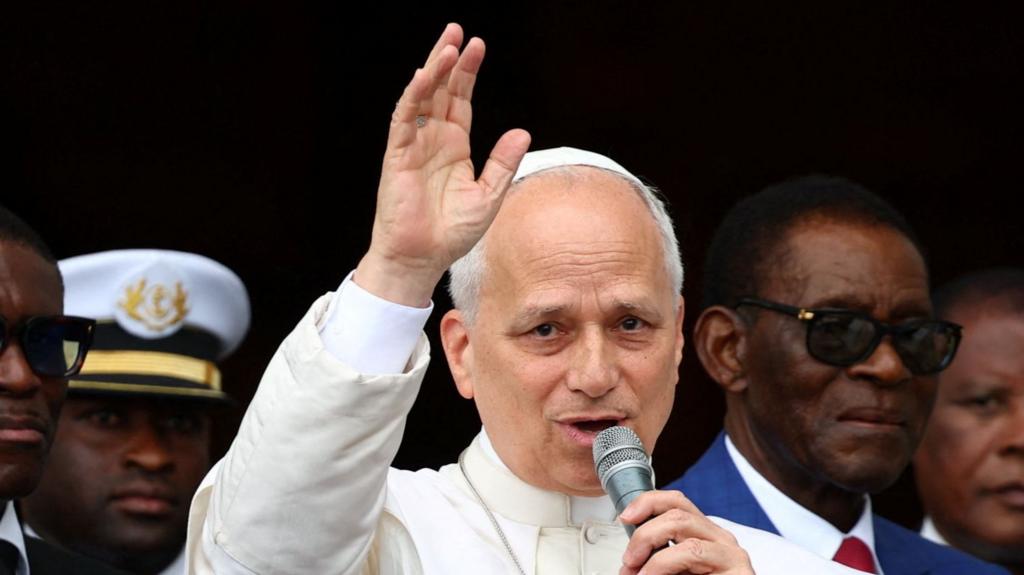
Source: www.bbc.com
As Pope Leo XIV concluded his landmark African tour, his unflinching criticism of Equatorial Guinea's prison conditions sent shockwaves through the international community. The pontiff's remarks, delivered during a public address in Malabo, marked a rare instance of direct papal intervention in the internal affairs of a sovereign nation, particularly one with close ties to the Vatican.
The Pope's speech highlighted the deplorable state of Equatorial Guinea's detention facilities, describing them as places where human dignity is systematically violated. This condemnation comes against the backdrop of a nation rich in oil wealth yet plagued by stark economic inequality and political repression. Human rights organizations have long documented cases of arbitrary detention, torture, and inhumane treatment within the country's prison system.
Equatorial Guinea, ruled by the same family for over four decades, has maintained a complex relationship with the Catholic Church. While the state officially recognizes Catholicism as the predominant religion, the government has also been accused of using religious institutions to legitimize its authority. Pope Leo's bold stance represents a significant departure from the diplomatic caution typically exercised by Vatican officials in their dealings with authoritarian regimes.
The implications of this papal intervention extend beyond Equatorial Guinea's borders. It signals a potential shift in the Catholic Church's approach to addressing human rights abuses in Africa and may embolden other religious and civil society leaders to speak out against government excesses. Moreover, it raises questions about the role of international religious figures in promoting democratic values and human rights in regions where secular institutions often struggle to effect change.
As the global community grapples with the challenges of promoting human rights and democratic governance, Pope Leo's courageous stand serves as a reminder of the influential role that moral authority can play in shaping political discourse and holding power to account.