Back to home
POLITICS30 April 2026
Pete Hegseth Faces Congressional Grilling Over Iran War in Six‑Hour Hearing
Defense Secretary Pete Hegseth endured a six‑hour Senate hearing, defending limited strikes against Iran while Democrats pressed for congressional authorization and warned of executive overreach. The clash underscores deep partisan divides over war powers and the future of U.S. military engagement in the Middle East.
La
La Rédaction
The Vertex
5 min read
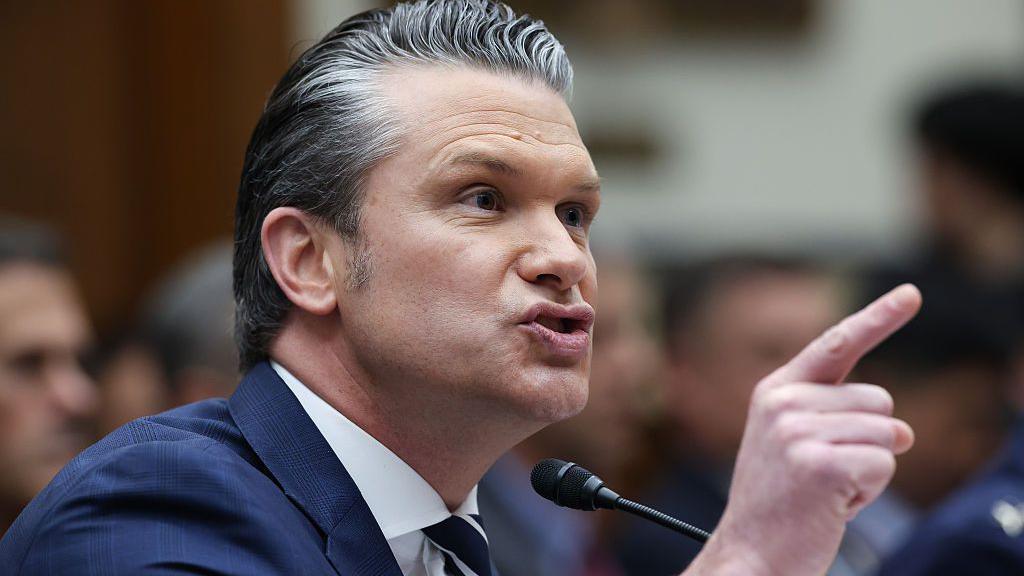
Source: www.bbc.com
In a nearly six‑hour Senate Armed Services hearing, Defense Secretary Pete Hegseth endured a grueling interrogation from Democrats, marking his first sworn testimony since the United States launched limited strikes against Iran’s nuclear infrastructure. The exchange highlighted deep partisan divides over the legality and scope of the war.
Hegseth defended the administration’s decision as a necessary deterrent, citing intelligence that suggested imminent Iranian attacks on U.S. assets in the Gulf. He argued that the strikes were narrowly tailored, avoiding broader escalation, yet lawmakers questioned the lack of congressional authorization and the potential for unintended civilian casualties. The hearing revealed tensions over the president’s use of emergency war powers, with Democrats warning of a slippery slope toward unchecked executive authority.
The confrontation fits a broader pattern since 2021, when successive administrations have invoked the 2001 Authorization for Use of Military Force to justify actions against Tehran. Historically, such hearings have rarely altered policy but serve as a barometer of congressional resolve and public scrutiny.
As the Biden administration prepares for possible retaliatory cycles, the hearing underscores the need for clearer legislative frameworks governing limited conflicts. Future diplomatic initiatives may hinge on whether Congress can reclaim its war‑making prerogatives, shaping the balance of power in an increasingly volatile Middle East.
Domestically, the hearing intensified scrutiny of Hegseth’s fitness for office, with several senators demanding a full accounting of the intelligence assessments that justified the strikes. Internationally, allies expressed mixed reactions; while some European partners welcomed the firm stance against Tehran, others cautioned that unilateral U.S. action could destabilize regional security architectures.