Back to home
INTERNATIONAL29 June 2026
Afghanistan’s New Front: Pakistan’s ‘Counter‑Terror’ Strikes and the Taliban’s Reckoning
Pakistani airstrikes in eastern Afghanistan have killed dozens, drawing condemnation from the Taliban, who called the operation cowardly. The incident marks a rare escalation in the fraught Pakistan‑Afghanistan relationship.
La
La Rédaction
The Vertex
5 min read
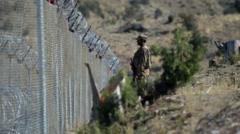
Source: www.bbc.co.uk
On the night of June 28, Pakistani security forces launched a series of airstrikes across eastern Afghanistan, killing at least dozens of civilians and fighters, according to Taliban officials. The operation was framed by Islamabad as a direct response to what it described as a “terrorist attack” on its soil, a claim the Taliban dismissed as “cowardly” and an affront to their sovereignty.
The strike marks a rare escalation in the long‑standing, uneasy partnership between the two neighbours. While Pakistan has historically tolerated limited cross‑border incursions against militant hideouts, this is the first large‑scale aerial assault explicitly targeting Afghan territory under Taliban control. Analysts argue that the move signals Islamabad’s growing willingness to adopt a more assertive security posture, potentially destabilising the Taliban’s internal cohesion and its ability to govern large swathes of the country.
Historically, Afghanistan has been both a sanctuary and a flashpoint for Pakistani‑based militant groups. Since the Taliban’s 2021 takeover, the regime has sought to curb such incursions, yet the porous border and entrenched insurgent networks make full control difficult. The latest strikes echo earlier 2010s operations that aimed to dismantle the Tehrik‑e‑Taliban Pakistan (TTP) infrastructure, suggesting a continuation of a strategy that blends diplomatic pressure with kinetic action.
Looking ahead, the incident could trigger a reciprocal response from the Taliban, either through direct retaliation or by leveraging proxy groups to target Pakistani interests. Such a cycle would exacerbate an already fragile security environment, hindering humanitarian access and deepening the humanitarian crisis. The international community, meanwhile, may be forced to reassess its engagement with a regime that appears increasingly unable to prevent cross‑border violence.