Back to home
INTERNATIONAL8 July 2026
Nigeria's President Probes Phantom Agency: A Tale of Forged Appointments and Hidden Funding
President Bola Ahmed Tinubu has demanded a full inquiry into a fabricated agency allegedly created within his office, after a report revealed a civil servant forged an appointment letter and secured unauthorized funding. The case highlights deep concerns over corruption and transparency in Nigeria’s public administration.
La
La Rédaction
The Vertex
5 min read
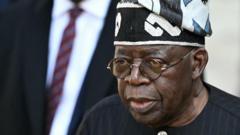
Source: www.bbc.co.uk
In a startling development that underscores the fragility of Nigeria’s administrative apparatus, President Bola Ahmed Tinubu has demanded a full inquiry into how a purported agency was allegedly established within the confines of his own office, a move that follows a report dated July 8 2026 revealing the alleged forgery of an appointment letter and the unauthorized allocation of budgetary resources.
Adeniyi Adeyemi, a senior civil servant in the Ministry of Finance, is accused of fabricating a formal letter of appointment that conferred authority on a fictitious agency, then securing funding from the national treasury under the pretense of legitimate operations. The presidency has stated that it had no prior knowledge of the agency’s existence or its financial commitments.
The episode comes amid Nigeria’s ongoing struggle with corruption, where the Economic and Financial Crimes Commission (EFCC) has repeatedly uncovered irregularities in public procurement. Analysts suggest that the alleged scheme exploits gaps in oversight, allowing officials to divert funds without immediate detection, thereby eroding public trust in governmental institutions and hampering development initiatives. Moreover, the case may trigger a review of the staffing and remuneration policies that enabled Adeyemi to operate unchecked for months before detection.
If the investigation confirms the forgery, it could catalyze stricter internal audit protocols within the presidency and prompt legislative proposals to tighten financial controls across federal ministries. Such measures would align Nigeria with international anti‑corruption standards and may restore confidence among investors and civil society, signaling a decisive step toward accountability. The president’s demand also reflects broader public pressure for transparency, as citizens increasingly demand accountability from leaders who wield vast fiscal authority.