Back to home
INTERNATIONAL2 July 2026
Nigeria Pursues Compensation for Property Abandoned by Citizens Fleeing South Africa
Nigeria’s High Commission in Pretoria is documenting all businesses and real estate left behind by citizens who fled South Africa, signaling an intent to seek compensation. The move reflects broader tensions over xenophobic violence and the enforcement of a 2019 bilateral treaty protecting cross‑border economic rights.
La
La Rédaction
The Vertex
5 min read
Source: www.bbc.co.uk
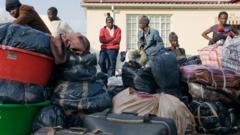
The Nigerian High Commission in Pretoria has announced that it is cataloguing every business and piece of real estate abandoned by Nigerians who were forced to flee South Africa, a move that signals an intention to pursue compensation for the material losses incurred during the recent wave of displacement.
Legal experts note that the claim rests on a complex web of international property rights, bilateral agreements and the principle of restitution for victims of xenophobic violence. While South Africa has yet to issue a formal response, Nigerian officials argue that the systematic seizure of assets undermines the 2019 treaty that guarantees the free movement of citizens and protects their economic interests, potentially exposing both states to reciprocal claims and litigation in international courts.
The episode follows a series of violent outbreaks in South Africa since 2015, most notably the 2019 wave of attacks that displaced thousands of foreign nationals, including many from Nigeria. Past attempts at reparations have faltered, leaving a legacy of mistrust that now fuels a diplomatic push for monetary redress, which could reshape trade flows and the flow of capital between the two economies, as well as affect the perception of regional stability among investors.
Analysts warn that the compensation process will test both governments' capacity to verify claims, prevent fraud and negotiate a settlement that balances restitution with fiscal prudence, while also influencing broader regional mechanisms for diaspora rights and post‑conflict recovery, potentially setting a precedent for how other nations address historic dispossession linked to cross‑border migration.