Back to home
POLITICS9 June 2026
Myanmar’s Fractured Front: How the Military’s Mobilization Undermines the Resistance
The BBC’s on‑the‑ground reporting shows that the junta’s forced conscription is draining experienced insurgents, turning fluid frontlines into static trenches. This shift jeopardizes the sustainability of the resistance and deepens civilian suffering.
La
La Rédaction
The Vertex
5 min read
Source: www.bbc.com
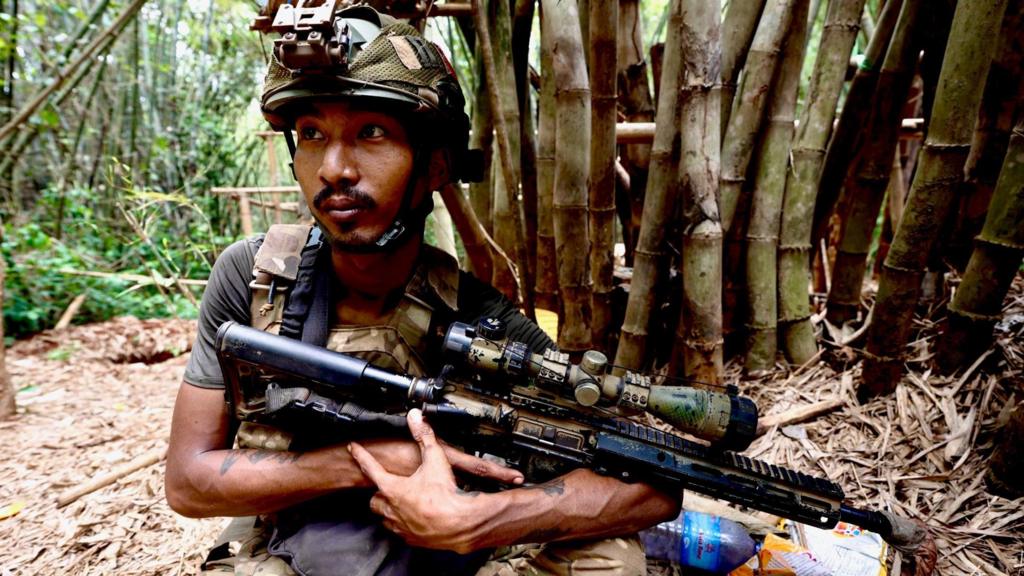
The BBC’s convoy slipped through the smoldering outskirts of Kayin State, where the air smelled of burnt vegetation and distant artillery reminded everyone the war was far from over. Inside a makeshift camp, a young commander, his face streaked with mud, briefed journalists on the latest displacement of his fighters, showing how once‑fluid frontlines have hardened into static trenches. The journey was fraught with checkpoints where soldiers demanded identification, highlighting the regime’s tightening grip.
The military’s recent mobilization campaign, which conscripts civilians into regular units, has siphoned experienced insurgents away from guerrilla tactics. While the junta claims this bolsters national defense, it simultaneously erodes the rebels’ manpower, disrupts supply routes, and forces a shift from hit‑and‑run tactics to more conventional, resource‑intensive operations. Moreover, draft quotas have risen sharply, with reports of forced enlistment in remote villages, leading to desertions and a loss of local intelligence.
This development fits into a broader pattern since the 2021 coup, when the Tatmadaw intensified its campaign against ethnic armed organizations and civilian resistance groups, employing both kinetic pressure and political co‑optation. International donors have scaled back support, wary of the conflict’s protracted nature, while neighboring states remain divided over how to respond. The erosion of rebel capacity also hampers coordinated humanitarian access, as aid convoys face increased harassment and the junta restricts movement to consolidate control over contested areas.
If the trend continues, the resistance may be forced into a defensive posture, ceding territory and legitimacy to the junta, prolonging civilian suffering and limiting prospects for a negotiated settlement. Yet the adaptability of grassroots networks suggests that, even in retreat, the movement may regroup, leaving the military’s victory far from assured. Such a scenario could entrench the junta’s rule, deepening the humanitarian crisis and complicating future reconciliation, while the international community may be forced to reassess its engagement strategies.