Back to home
POLITICS30 March 2026
Myanmar's Path to Authoritarian Consolidation: Min Aung Hlaing's Ascendancy
Myanmar's military leader Min Aung Hlaing is set to become president, cementing authoritarian rule after the 2021 coup. His nomination, despite Western sanctions, signals continued repression and isolation for the Southeast Asian nation.
La
La Rédaction
The Vertex
5 min read
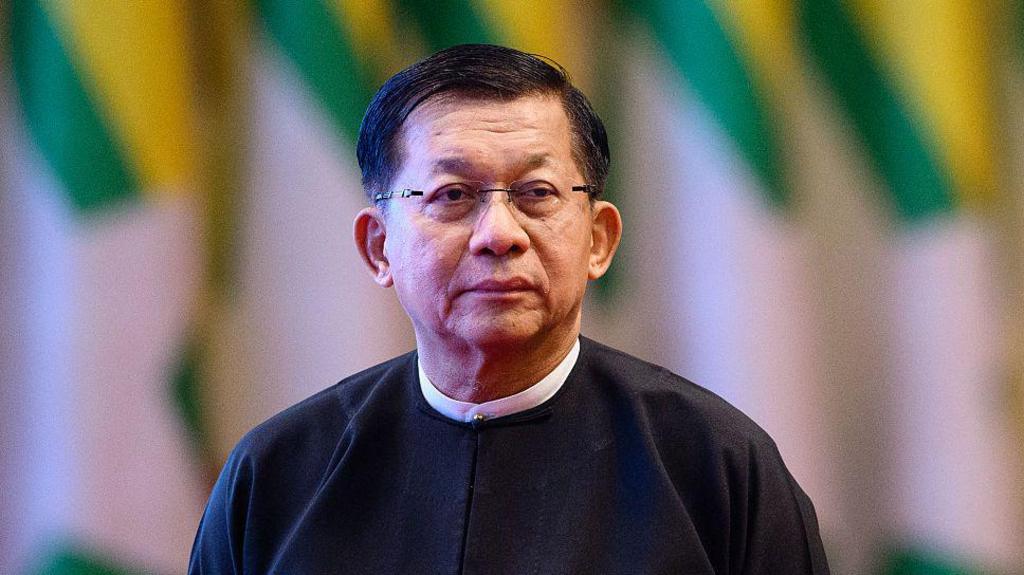
Source: www.bbc.com
The nomination of Senior General Min Aung Hlaing as Myanmar's president represents a calculated move in the military's decade-long strategy to maintain absolute control over the nation. Since the February 2021 coup that overthrew Aung San Suu Kyi's democratically elected government, the junta has systematically dismantled democratic institutions while consolidating power through violence and repression.
Min Aung Hlaing's ascension is particularly significant given his role in orchestrating the coup and the subsequent brutal crackdown on pro-democracy protesters. Western sanctions targeting him personally have failed to deter his ambitions, highlighting the limitations of economic pressure against determined authoritarian regimes. His nomination comes amid ongoing civil conflict, with multiple ethnic armed groups and People's Defense Forces continuing resistance against military rule.
The military's control of parliament ensures Min Aung Hlaing's election, but the legitimacy question looms large. International recognition remains elusive, with most democratic nations refusing to acknowledge the junta's authority. This isolation has pushed Myanmar deeper into China's orbit, creating a geopolitical shift in Southeast Asia. The economic consequences have been severe, with the kyat's value plummeting and foreign investment evaporating.
Looking ahead, Min Aung Hlaing's presidency likely signals continued authoritarian rule and potential escalation of conflict. The military's historical pattern suggests resistance to any compromise, making peaceful resolution increasingly improbable. For Myanmar's citizens, this development represents another chapter in their struggle against military domination that has defined much of the country's post-independence history.