Back to home
SOCIETY18 May 2026
The Admissibility of Evidence in Luigi Mangione’s New York Murder Trial
A New York judge has ruled that the firearm recovered at the scene and Mangione’s handwritten notes may be presented as evidence in his murder trial. This decision underscores the balance between evidentiary relevance and privacy concerns in high‑profile criminal cases.
La
La Rédaction
The Vertex
5 min read
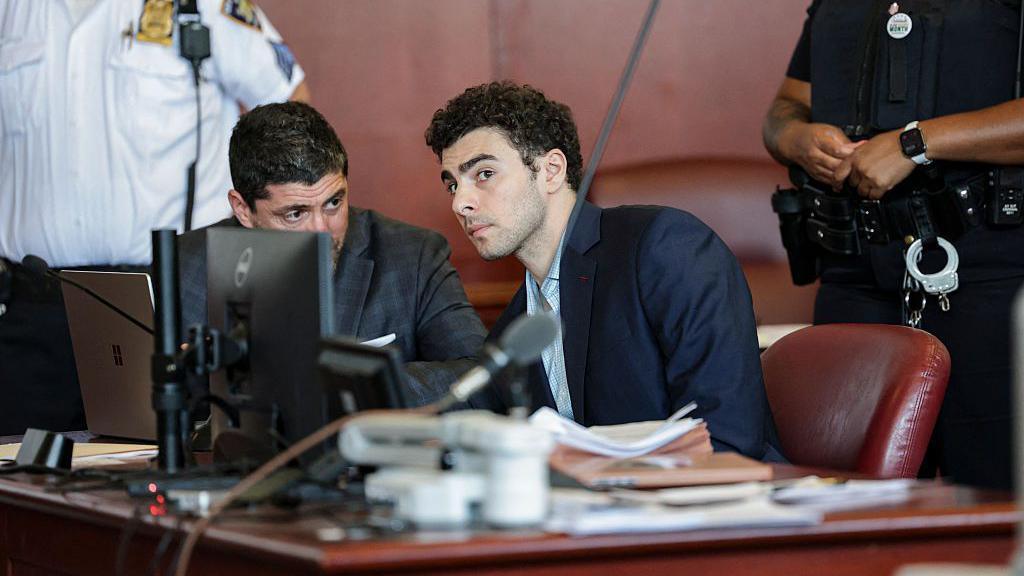
Source: www.bbc.com
Judge rules gun, writings are admissible in Luigi Mangione's New York murder trial marks a pivotal moment in the high‑profile case of Luigi Mangione, accused of killing UnitedHealthcare CEO Brian Thompson. The decision, handed down by New York Supreme Court Justice [Name], will allow the prosecution to introduce the firearm recovered at the scene and a set of handwritten notes found in Mangione’s possession as key pieces of evidentiary material.
The judge’s reasoning hinges on the probative value of the gun, which matches the weapon used in the homicide, and on the personal writings, which articulate a motive rooted in ideological discontent and personal grievance. By admitting these items, the court underscores that evidence directly linking the suspect to the act and revealing intent is admissible, even if it carries emotional weight, provided it meets the standard of relevance and reliability.
This ruling fits within a broader judicial trend that scrutinizes the balance between evidentiary relevance and privacy considerations in violent crime cases. In recent years, courts have increasingly permitted digital footprints and physical artifacts when they establish a direct link to the alleged conduct, while simultaneously demanding rigorous authentication to avoid prejudice. The decision thus reflects evolving evidentiary standards in an era where online discourse and tangible evidence often intersect.
If upheld, the admission of the gun and writings could bolster the state’s case and set a precedent for future homicide prosecutions involving firearms and personal manifestos. Conversely, an appellate reversal might tighten the criteria for admitting such material, emphasizing the need for clearer thresholds that protect defendants from prejudicial evidence while preserving the integrity of criminal investigations.