Back to home
ECONOMY22 April 2026
Lufthansa's Flight Cuts: The Hidden Cost of Geopolitical Tensions
Lufthansa's cancellation of 20,000 summer flights due to soaring fuel prices highlights the aviation industry's vulnerability to geopolitical tensions. This crisis exposes broader economic implications and underscores the urgent need for sustainable alternatives in air travel.
La
La Rédaction
The Vertex
5 min read
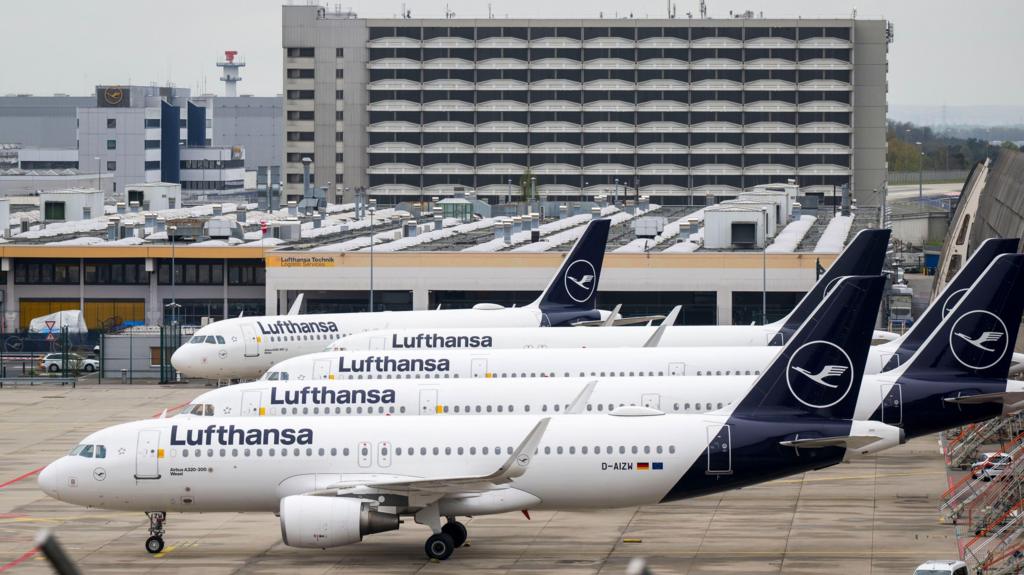
Source: www.bbc.com
The aviation industry is once again bearing the brunt of geopolitical instability. Lufthansa's decision to cancel 20,000 summer flights marks a significant disruption in European air travel, directly linked to the surge in jet fuel prices triggered by the escalating US-Israel-Iran conflict. This move follows similar actions by other major carriers, including Air India and Turkish Airlines, signaling a broader crisis in the sector.
The timing couldn't be worse. Summer is peak travel season, and these cancellations will leave thousands of passengers stranded or scrambling for alternatives. Beyond the immediate inconvenience, this crisis exposes the aviation industry's vulnerability to external shocks. Airlines operate on razor-thin margins, and sudden spikes in fuel costs can quickly erode profitability.
What makes this situation particularly concerning is its potential to become a self-fulfilling prophecy. As airlines cut capacity to manage costs, ticket prices rise, potentially suppressing demand. This could lead to a vicious cycle where reduced travel further strains airline finances, prompting more cuts and higher prices.
The broader economic implications are significant. Tourism-dependent economies across Europe may see reduced visitor numbers, while business travel—already recovering from pandemic disruptions—faces new challenges. Moreover, this crisis highlights the urgent need for the aviation industry to accelerate its transition to more sustainable fuel alternatives and improve operational efficiency to better withstand such shocks.
As the conflict in the Middle East continues, the aviation sector must brace for more turbulence. The current crisis serves as a stark reminder that in our interconnected world, regional conflicts can have far-reaching consequences, disrupting not just geopolitics but also the daily lives of millions of travelers.