Back to home
INTERNATIONAL13 July 2026
The End of a Political Bridge: Lindsey Graham’s Sudden Demise
Senator Lindsey Graham, a 71‑year‑old Republican stalwart and close ally of Donald Trump, has died after a brief cardiac illness, according to his office. His passing marks the end of a three‑decade Senate career that bridged traditional conservatism and the populist wave that reshaped the GOP.
La
La Rédaction
The Vertex
5 min read
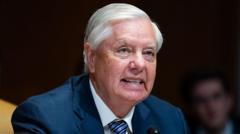
Source: www.bbc.co.uk
South Carolina’s senior senator Lindsey Graham, a 71‑year‑old stalwart of the Republican establishment and one of former President Donald Trump’s most vocal allies, has died following a brief and sudden illness. His office announced that initial medical findings point to a cardiac event as the cause of death, marking the end of a political career that spanned three decades.
Graham’s tenure, which began in 2003, positioned him as a pivotal bridge between the party’s traditional conservatism and the populist surge that propelled Trump to the White House. Known for his willingness to critique and later endorse the president, he leveraged his Senate leadership role to shape foreign policy debates, especially regarding the Middle East and judicial nominations.
Beyond partisan theatrics, Graham championed legislation on immigration reform, criminal justice, and national security, often seeking bipartisan solutions that contrasted with the increasingly polarized climate of the GOP. His pragmatic approach earned respect from some Democrats while drawing ire from hard‑line conservatives, illustrating the internal fractures that now define the party.
His death arrives at a moment when the Republican Party is navigating the aftermath of Trump’s presidency and confronting electoral challenges in upcoming midterms. The loss of a figure who could still command bipartisan attention underscores the volatility of contemporary American politics, where personal loyalty often eclipses institutional norms.
Analysts predict that Graham’s passing will intensify competition for his Senate seat, potentially reshaping the balance of power in South Carolina and offering Trump a strategic opportunity to reinforce his influence within the state’s delegation. The long‑term impact, however, will depend on whether the party can harness his legacy of institutional advocacy amid rising populist currents.